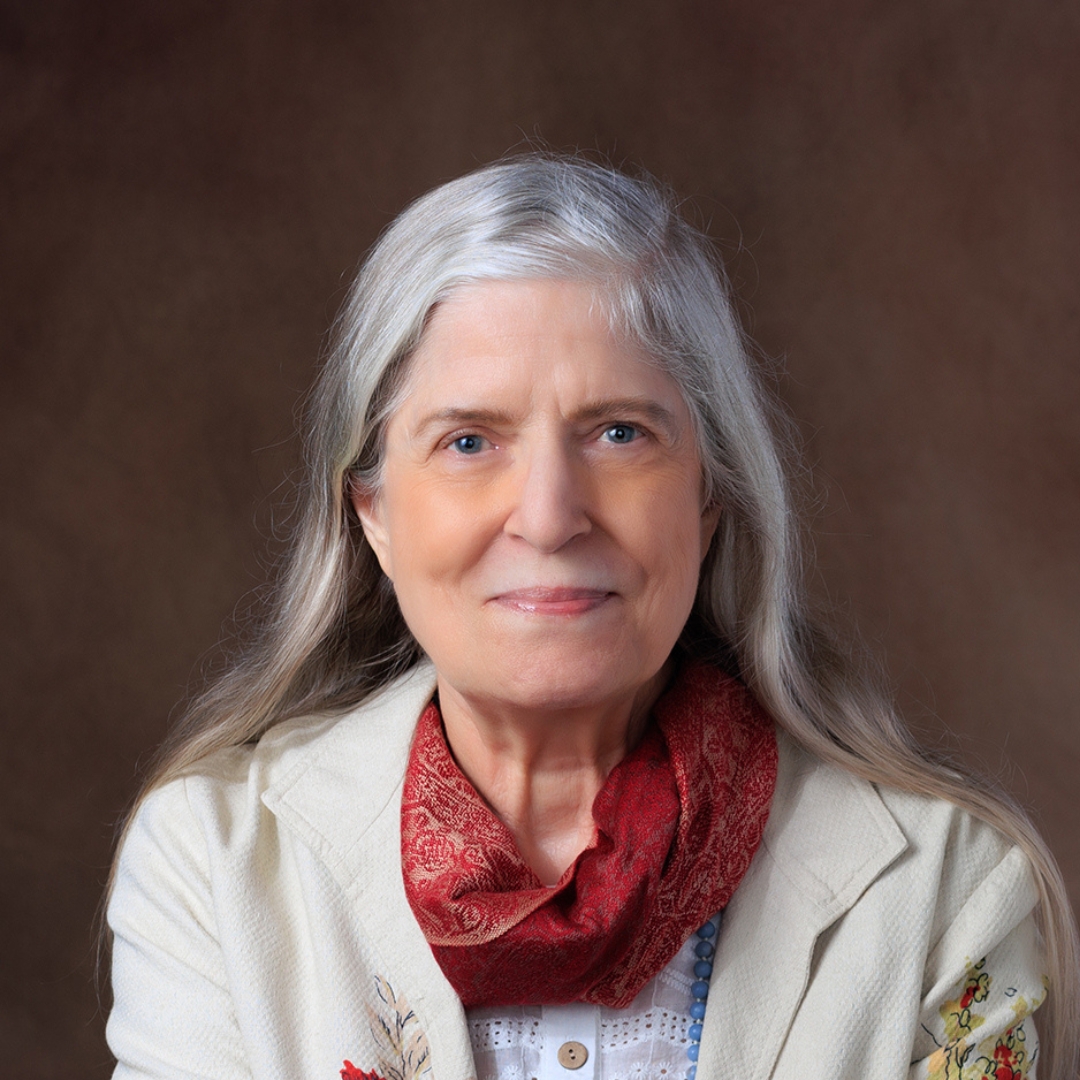
Podcast: Eager to Be Healthy
Guest: Elizabeth Kipp, stress management and historical trauma specialist, certified addiction recovery coach, Ancestral Clearing® practitioner, author of The Way Through Chronic Pain
Host: Michael Scott Eger
Episode length: about 52 minutes
Watch or listen: Elizabeth Kipp on Eager to Be Healthy

Elizabeth Kipp lived with chronic pain for more than forty years and spent thirty-one of them on prescribed opioids and benzodiazepines, the last fifteen on fentanyl. She is here, she is well, and the thing that finally got her there was not another prescription. She also corrected me on my own show, politely, about halfway through. I earned it.
What surprised me was not the fentanyl. It was what she said about the thirty years before it. She was doing fine. Her doctors thought so. She functioned. She showed up. She went to work and came home and took what she was prescribed and did it again the next day.
Doing fine is not a health status. It is a report card nobody bothered to check.
“Doing Fine” Is Not the Same as Being Well
I open every episode the same way. Have you always been healthy?
Elizabeth did not reach for a yes or a no. She went back to the beginning, and the beginning was rough. Formula with sugar in it instead of breast milk. Three glasses of skim milk a day, which turned out to be a problem, because she was born unable to digest casein, the base protein in milk. Lifelong irritable bowel that no doctor could name or treat. A mother with undiagnosed bipolar disorder who managed it with alcohol, which meant a house full of cortisol before Elizabeth was old enough to know the word.
Three things stacked on each other. Sugar. An inflamed gut. A nervous system raised on stress.
She is five foot four. Her mother was five foot nine and her father was six foot two.
She does not blame her parents. She was clear about that, more than once. They read the landscape the way everyone read it in the 1950s and they had no idea. She is doing something more useful than blame. She is tracing the wiring.
Why Chronic Pain Is a Nervous System Problem, Not Just a Tissue Problem
Here is the line from this episode that I keep coming back to.
The brain can’t tell the difference between one kind of pain and the other. It all sends the same signal, it hurts.
Chronic pain is physical, mental, emotional, spiritual, and the brain processes all of it on the same wires. Elizabeth said that when people hear chronic pain they picture a back or a knee. The emotional load rides the same circuit, and the brain weighs it the same.
Pain research has been moving in her direction for a while now. In 2017 the International Association for the Study of Pain adopted the term “nociplastic pain” as a third category alongside tissue-damage pain and nerve-damage pain. It describes pain that arises from altered signal processing in the central nervous system when there is no clear injury left to find. The mechanism underneath it is central sensitization, defined as an amplification of neural signaling that produces pain hypersensitivity.
Read that as a layperson. The alarm system gets louder. Stay in pain long enough and the alarm learns to stay loud on its own.
Elizabeth described what that felt like from the inside. More fight or flight. Hypervigilance. Memory going soft, keys disappearing, thoughts sliding. And the emotional center taking hits, which in her case pointed inward.
I wasn’t so much negative at others. I was negative towards me.
That is the part the imaging does not show and the pamphlet does not mention.
Safety Comes Before Digestion, and Almost Everything Else
We got into safety early and it reorganized the rest of the conversation.
When you do not feel safe, your body makes a decision on your behalf. Blood flow goes to the systems that keep you alive right now. The meal you just ate moves to the bottom of the list. Elizabeth put it plainly: you cannot digest when you are in fight or flight.
So consider the order of operations most of us are handed. Fix the diet. Fix the sleep. Fix the exercise. Nobody says fix the safety first, and the body will not run the other programs until that one clears.
She grew up walking on eggshells. She also picked up a skill from it. She can read a room in about four seconds. She counts that as a gain, and she still names what it cost.
Thirty-One Years of Prescriptions, and Twelve Days That Ended Them
Decades of opioids and benzodiazepines, because that was the only answer her doctors had. Fentanyl for the last fifteen of those thirty-one years.
Elizabeth never accepted the answer. She kept looking while she took it. The breakthrough came when she found a doctor who understood the nature of chronic pain and could get her off the medication.
The detox was twelve days in a chemical dependency hospital in 2013. Paralytic for most of it, which she describes with the flat curiosity of a scientist: she knew she was paralyzed, could not move or open her eyes, and could hear everything. A tapered Suboxone dose for five days after. Then a wheelchair, because she was too weak to walk out.
She shook for about thirty days. No cravings. No sweats. Shakes, bad sleep, and a meditation practice she leaned on hard.
She came off the fentanyl and the Ativan at the same time. The benzodiazepines were the harder of the two by a distance, and that tracks with what the research community has been documenting since. In 2023 a workgroup of twenty-three clinicians and researchers proposed the term benzodiazepine-induced neurological dysfunction, or BIND, for the symptoms that persist during tapering and after discontinuation. Elizabeth had those symptoms in 2013. There was no name for them yet.
Worth saying out loud: she did this with medical supervision, in a hospital, with a team. Benzodiazepine withdrawal can be dangerous. Nobody should read this post and taper anything on their own.
The Breath Is the Bridge
She would fall asleep and wake up with what she called a ten-alarm fire going off in her body. Adrenaline dumping, no reason attached to it, the nervous system yelling one thing on repeat.
Where are the benzos. Where are the benzos.
I’m like, we’re gonna breathe. We’re not gonna do benzos, we’re gonna breathe.
Long, slow, deep, with the exhale stretched out. She said she felt graced to have just enough room in her mind to remember to do it. Then she said the line that ended up in my notes twice.
The breath is the bridge. If you just stay with the breath, it’ll take you through.
I called it the lowest life force we can control on purpose. She corrected me, kindly, and used the accurate words: it is the only part of the autonomic nervous system we can take over directly. I told her that if she wanted to use fancy words like that, fine.
That is the whole mechanism in one exchange. Everything else in the autonomic system runs itself. Breath has a manual override. Take the override and you send a signal upstream, because the nervous system reads long slow breathing as evidence of safety.
She uses it during the workday now. When her mind gets squirrely, she checks her breath, and it has already gone short and ragged. She drops into a long one and comes back.
Free. Portable. No prescription, no copay, no side effects.
What Came Back When the Medication Left
About a week out of detox, Elizabeth started salivating at the sight of food. Then at the thought of food.
Her doctor spent an entire hour appointment talking about nothing except food. She thought he was torturing her. He was firing up a system that had been offline for three decades.
Opioids slow the gut. That is not a fringe claim. It is one of the best documented side effects in the literature, the reason opioid-induced bowel dysfunction has its own research field and its own drugs. For Elizabeth the gut had been essentially paralyzed for years, which meant she had spent those years force feeding herself and getting very choosy about what went in. She thinks that choosiness may have saved her.
The one thing that took real time was leaky gut, roughly a year to heal.
Then the sugar. She came out of treatment with a sugar problem she had carried since infancy, and she cleared the cravings with a tapping technique, about six rounds of it. Her acupuncturist gave her the sentence that made it make sense: inflammation plus sugar is gasoline on a fire.
And the reward at the far end of that is small and strange and worth knowing about.
Peas and cauliflower and tomatoes and even green beans taste sweet.
Taste buds recalibrate. Give them a few weeks without the loudest signal in the room and they start picking up the quiet ones.
Inputs You Can Still Control
Neither of us likes the word protocol. What Elizabeth described is closer to a set of dials she can reach, and she was careful to frame every one of them as what worked for her rather than what anyone else should do.
Sleep rhythm, rebuilt deliberately after benzodiazepines wrecked it. Breathwork. Yoga. Tai Chi. An anti-inflammatory diet she reviews monthly with a functional medicine doctor and nurse practitioner, no dairy, very few grains, wild rice and careful doses of lentils. Good fats for the brain, ghee and coconut oil and avocado oil and flaxseed oil. Hydration, which she doubled on herself as an experiment and stuck with because she felt better. A pinch of Himalayan salt in the water, for the minerals.
I pushed on the hydration number, because “an ounce per pound” gets repeated everywhere and the trail behind it is thinner than most people assume. What survives is the honest version, which is also the better version: she ran the experiment on herself, tracked how she felt, and kept what worked. She asked listeners to do the same rather than take her number.
That is the Eager to Be Healthy move. Run it on yourself. Watch what happens. Keep a note.
On Ancestral Clearing®, her own modality, and on the daily zeolite spray she uses for detox support: I am reporting what she does, and I am not making a claim about either one. She is transparent that this is her practice, and she never once told anyone else to adopt it.
The Shorthand, and What Sits Underneath It
Teachers simplify. Elizabeth has spent years explaining this material to people in the middle of a pain crisis, and a clean sentence that lands beats a precise one that loses the room. We do the same thing on this show every week.
So this is not a correction. It is a set of footholds for anyone who wants to climb further into the research.
Holds up under a hard look. Pain as an interpreted brain signal that can rewire over time is mainstream pain science now, filed under central sensitization and nociplastic pain. Long-term opioid therapy for chronic non-cancer pain has weak evidence for lasting benefit and well-documented harms, including gut dysfunction and, in a meta-analysis of clinical populations, opioid-induced hyperalgesia, where pain gets worse on the drug meant to treat it. That last one sharpens her point rather than softening it. Persistent neurological symptoms after benzodiazepines now have a name and a literature behind them.
Shorthand, unpacked. The ounce-per-pound hydration rule circulates widely, and the guideline behind it comes from nutrition practice rather than a controlled trial on athlete injury rates. The number to trust is the one Elizabeth actually offered: the one you get from testing it on yourself. The breath-as-exit-route idea has a real paper behind it, a 2014 study in the BMJ finding that 84 percent of the mass of metabolized fat leaves the body as exhaled carbon dioxide. The lungs really are a primary excretory route, and the percentage drifts as the fact gets retold. And sugar and opioids light up the same reward circuitry rather than the same receptors, which is a fine distinction that still explains the very real craving overlap she lived through.
The recovery is not a claim that needs propping up. She got herself off fentanyl and benzodiazepines and rebuilt a body that works. Everything above is for the reader who wants to keep pulling the thread.
The Book, and Why It Exists
The Way Through Chronic Pain: Tools to Reclaim Your Healing Power is barely her story. There is a thread of it in there and that is all.
She wrote it as a second volume to a book by the doctor who treated her, Dr. Peter Przekop, whose Conquer Chronic Pain: An Innovative Mind-Body Approach came out of his years running the chronic pain clinic at the Betty Ford Center. His book is the physician’s view. Hers is the one nobody had written.
She sat in front of thousands of chronic pain sufferers over three decades, in hospitals, rehab centers, and treatment programs, and she noticed that they all sounded alike. Two camps, and only two. The ones who complain constantly, and the ones who never say a word.
We don’t tell the truth.
She was in the second camp. She wanted somebody to take the reader inside that head.
I also want it on the record that she waited forty-five minutes into a fifty-two minute episode before mentioning the book, and then plugged it in about nine seconds. I have real appreciation for blatant marketing. I have more appreciation for knowing when the window opens.
One Last Thing
I asked if she wanted to add anything before we signed off.
The greatest healer in your body lives within you. Doctors can set a bone and stitch up a wound, and they can’t tell the body how to heal. Only the body knows how to do that.
I waited years for somebody to hand me the answer. Nobody did.
If you are somewhere in the middle of that, pick one dial. Just one. The breath is free and it is already in your hand.
Key Takeaways
- Doing fine is not a health status. It is a functioning body with an unopened bill.
- Pain is a signal the brain interprets, not a readout of tissue damage. Stay in it long enough and the alarm system learns to stay loud.
- Your brain does not sort pain by type. Physical, emotional, mental, spiritual. Same wire, same message.
- Safety is physiology, not a mood. You cannot digest well in fight or flight, so safety comes before the meal plan.
- The breath is the only autonomic override you have. Long, slow, extended exhale tells the nervous system the emergency is over.
- Long-term opioids carry a bill. Slowed gut, suppressed breathing, and in some people, pain that gets worse on the drug.
- Benzodiazepine symptoms can outlast the taper. It has a name now, BIND, and it did not in 2013.
- Taste buds recalibrate. Take out the loudest signal and vegetables start tasting sweet.
- Run the experiment on yourself. Elizabeth doubled her water, tracked how she felt, and kept it. She asked listeners to test rather than to obey.
Find Elizabeth Kipp
- Website: elizabeth-kipp.com (the hyphen matters, or you will find a different Elizabeth Kipp)
- Book: The Way Through Chronic Pain: Tools to Reclaim Your Healing Power. Amazon author page
- Free chapter download: Preface, Foreword, Introduction, and Chapter One
- Free resource: 5 Ways to Relieve Stress, Anxiety, and Fear
- Facebook: elizabeth.kipp.3
- Instagram: @lizi.kipp
- LinkedIn: elizabethkipp
- Substack: Sacred Rebelle
- YouTube: @elizabethkipp9855
Before You Go
Subscribe wherever you listen, so the next conversation finds you instead of the other way around. Then pick one thing from this episode and actually run it this week. My vote is the breath, because it costs nothing and you already have it on you. Tell us in the comments what you tried and what happened, because that is the part we all learn from.
Eager to Be Healthy is a value-for-value podcast. No ads, no sponsors, nobody telling us what we can and cannot say. If this episode was worth something to you, send back what it was worth at eagertobehealthy.com/support.
Got a story like Elizabeth’s, or a corner of health you think the Hive should hear about? Come on the show. Start at eagertobehealthy.com/booking.
Always consult your healthcare provider before making changes based on health content. Elizabeth Kipp’s detox was medically supervised in a hospital setting. Benzodiazepine and opioid withdrawal can be dangerous, and nothing in this post is a taper plan.
Full Episode Transcript
Elizabeth Kipp: I’m Elizabeth Kipp, and I’m eager to be healthy.
Michael Scott Eger: Our guest today is Elizabeth Kipp. Three decades of chronic pain, prescription medications on top of that. Most people call that a life sentence. Elizabeth treated it like a starting line. She is a certified addiction recovery coach, an Ancestral Clearing practitioner, and an international best-selling author of The Way Through Chronic Pain: Tools to Reclaim Your Healing Power. She got herself out first. Then she built the map so other people could follow. Her work lives where trauma physiology meets intergenerational healing, nervous system regulation, ancestral clearing, learning to read the signals your body is sending, trauma-informed recovery. The goal isn’t to manage suffering. It’s handing you your freedom, your steadiness, and your trust in yourself. Elizabeth, welcome to Eager to Be Healthy.
Elizabeth Kipp: Thank you so much, Michael. I’m so glad to be here.
Michael Scott Eger: Before we start, I just want to remind everyone we’re listener supported. That means we’re a value-for-value podcast. If you want to support us and keep this program ad free, go to eagertobehealthy.com/support. Now, Elizabeth, have you always been healthy?
Elizabeth Kipp: That’s a great question. I don’t think I’ve ever been as healthy as I am now. You know, Michael, I was raised in the mid fifties and sixties, and the way that my parents read the landscape there was, first of all, I wasn’t breastfed. So that’s like not getting started in life well at all. They started with formula with sugar in it. So that creates what we call sugar addiction. And also, by the way, sugar creates massive inflammation in the body. So if you’ve got any inflammation in the body and you add sugar, now you’re pouring gasoline on the fire. They didn’t know any of that. My poor parents, they had no idea.
Elizabeth Kipp: I started that way, and then it turns out that I was born with the inability to digest casein, which is a base protein in milk. And I was forced to drink three glasses of skim milk a day. Skim milk is like, a lot of the stuff is taken out of it, but it has this casein. So I ended up with pretty much lifelong, well, until I stopped drinking milk, irritable bowel, which the doctors couldn’t identify or medicate for. So I just lived with it. That was one of those things. And my mom was an undiagnosed, untreated bipolar disorder sufferer.
Elizabeth Kipp: And she treated her imbalance with alcohol, which created a lot of dysfunction in the family. So those three things right there. Sugar. Irritable bowel, so an unhealthy gut. And cortisol, right? Stress in the family that creates cortisol in the system. That’s also inflammatory. So no, I wasn’t really.
Elizabeth Kipp: I grew and all that stuff, but what’s interesting is I’m five foot four and my mother was five foot nine and my father was six foot two. So what happened to me, right? I got kind of stunted. Also, my mom smoked and drank alcohol while she was pregnant with me, and that tends to stunt the child, which of course they didn’t know.
Elizabeth Kipp: But the health thing was always a struggle for me. I was always trying to be as healthy as possible, but I just didn’t have the information or the ability. And even when I was on all that medication for the pain and the anxiety that came with it, I was still on a quest for healthy food. What’s the best food I can get? I can’t tell you how many diets I looked at. And now I work in functional medicine, with a functional medicine doctor and an anti-inflammatory diet, and that’s been very helpful.
Michael Scott Eger: So you’re backed up by a real MD, or a nurse practitioner?
Elizabeth Kipp: No, he’s a functional doctor, and he has a nurse practitioner that works with him. I just saw them today. I see the doctor first and then I see the nurse practitioner.
Michael Scott Eger: Okay. So they’re your care team?
Elizabeth Kipp: Yeah. I see them once a month. We’re always tweaking the diet, see what’s happening here, what’s happening there. It’s very helpful. And it’s an anti-inflammatory diet, so I do pretty well. Of course, no dairy.
Michael Scott Eger: Excellent.
Elizabeth Kipp: No dairy. And it’s anti-inflammatory, so no grains, very few beans. I don’t eat grain. I do eat wild rice from time to time. That’s not really considered a grain, it’s a grass. And I have lentils or hummus, garbanzo beans, in kind of careful doses. They can be inflammatory, but they also are really good for feeding the gut biome. So anyway, we could get into it.
Michael Scott Eger: We’ll flesh that out. But you hit on a good point, and the dose matters. Have you always been happy?
Elizabeth Kipp: That’s a very interesting question. I was mostly a nervous child. You can imagine living in a family where I’m walking on eggshells all the time. I was happy with my friends at school. And I was happy when I was outside with nature. So I had the capacity, but I would get very guarded and withdrawn when I got home.
Elizabeth Kipp: So what I would say to that question is, it depends. It depends on what time of the day it was, where I was, who I was with, how safe I felt in the environment. And I’ll also say that I was in chronic pain all those years.
Elizabeth Kipp: And I wouldn’t say that I was happy. I wouldn’t actually use that word. The thing that was very helpful for me was gratitude.
Elizabeth Kipp: Even as I was growing up as a child, and it would hit the fan at home, I always had this, you know, this is happening right now, and I have a roof over my head and a bed to sleep in, and I’ve got food in my belly, and I’ve got friends at school. And I would always find something that I could be grateful for. And I look back at it now and I’m like, well, I actually learned a lot in those times when I was walking on eggshells in my family. I learned a lot from that. Like, I can really read a room. I walk in a room, I know what’s happening. But anyway, I’m just saying, was I happy? Am I happy? It depends.
Michael Scott Eger: Okay, so you hit on one theme that I want to highlight, and you mentioned safety.
Elizabeth Kipp: Sure.
Michael Scott Eger: That’s actually a huge portion of our ability to feel happy, because if we feel safe, we’re no longer in that survival mode where we think about, okay, what do I have to do to continue life? What do I have to do to keep myself safe, keep myself alive, keep maybe my loved ones alive? Then that’s all you’re thinking about, instead of nice flowers.
Elizabeth Kipp: Exactly. And we can’t digest when we’re in fight or flight. When we’re worried about our safety, if we don’t feel safe, we can’t digest food. It just doesn’t work. Or we’re going to have very poor digestion, we have all kinds of indigestion and stuff like that.
Michael Scott Eger: Yeah, the body diverts the blood flow to the rest of the organs to keep you alive. It’s like, that meal doesn’t matter right now. We’re going to focus on using the energy we have readily available.
Elizabeth Kipp: That’s right.
Michael Scott Eger: So anyway, you’ve been seeing these providers for how many years?
Elizabeth Kipp: I’ve been seeing this man since probably 2011, something like that. Long time.
Michael Scott Eger: Okay. And was that the pivot point, or did you make any discoveries or learn about your condition much earlier?
Elizabeth Kipp: Well, it would depend on the condition. I was on opiates and benzodiazepines for decades, because that was the answer the doctors had for my chronic pain. It was the only answer they had. And I didn’t accept the answer. I didn’t know what else to do, but I knew there was another answer. And I knew that the medication was causing all kinds of health issues, particularly in my digestion. So I knew it was messing with my nutrition. And so the big breakthrough was when I finally found a doctor who understood the nature of chronic pain and was able to detox me off the medication.
Elizabeth Kipp: As I detoxed off those medications, then my body had a chance to heal, and I healed really fast. It was really interesting how quickly. I mean, my sleep was kind of messed up, because coming off the benzodiazepines, they generally mess with your sleep, and when you come off of them they mess with it more. So it takes time for the body to find a sleep rhythm again. That was a big part of my work early in recovering from that. I’ve got to work with my sleep cycle. And I did, of course, exercise, and I did a lot of breath work, I did meditation to calm the mind. Chronic pain is physical, mental, emotional, spiritual.
Elizabeth Kipp: The brain can’t tell the difference between one kind of pain and the other. It all sends the same signal, it hurts. So when people hear chronic pain, they usually think just physical, but it’s emotional too. The brain is affected by all of it equally.
Elizabeth Kipp: So one of the things that happens with chronic pain is we go into more fight or flight. We have more hypervigilance, we have memory issues. I can’t think straight, I don’t remember where I put my keys, that kind of thing. And the emotional center gets hit, so that we become quite negative.
Elizabeth Kipp: I wasn’t so much negative at others. I was negative towards me. I turned it in on myself. And so the recovery really was about calming the chaos in the mind, calming the mind, and doing anything I could to support the body as it healed the hippocampus, that memory part that needed to be healed. We brought in very specific supplements to heal that. And breath work and yoga, and I did Tai Chi, and again, the sleep, of course, is very important. And then the nutrition. We just got me on an anti-inflammatory diet. And hydration was the other piece. Getting enough water every day was important.
Elizabeth Kipp: There was a study that was done by Philip Galganeo at Duke University with Olympic athletes, and they looked at the norm, the general rule for hydration, which was half an ounce of water per pound of body weight a day.
Elizabeth Kipp: So that was kind of the norm. And I’m at 120 pounds, so half an ounce of water per pound of body weight for me would be sixty ounces of water a day. That’s like not even two liters, right?
Elizabeth Kipp: So what they did in this study was they gave Olympic athletes the half an ounce of water per pound of body weight, up to an ounce of water per pound of body weight. And they found that the athletes that drank an ounce of water per pound of body weight, they didn’t get injured, or when they did, they healed very quickly.
Elizabeth Kipp: So that was significant to me. And I ran the experiment on myself, and yeah, I had to pee more often. That was definitely part of it. But man, I felt better. So that changes my daily water intake from sixty ounces of water to 120. So that changes it from about two liters to four liters, and it makes a big difference.
Elizabeth Kipp: It makes a big difference. So I encourage everybody listening here to run the experiment on themselves and see.
Michael Scott Eger: I want to thank you for actually explaining that study, because a lot of people just blindly say ounce per pound or something like that, but they don’t explain that the study was done on athletes, which is a good sample, but they also are working out, so they respirate more moisture and sweat more. But it’s important, because you have to flush those toxins out.
Elizabeth Kipp: Well, yes. And the cells need water. We’re like seventy percent water or something, depending.
Michael Scott Eger: Now, do you add electrolytes in?
Elizabeth Kipp: Yeah, a little pinch of Himalayan salt. Little pinch in there, so that we have the voltage. We want the hydration and the voltage, right? So we get the voltage from the minerals.
Michael Scott Eger: Yeah, my salt comes from the Great Salt Lake. The pink salt just for the fancy stuff.
Elizabeth Kipp: Well, there’s all kinds of salts you can get. Some of it’s more pure than others. You kind of have to look into it, but that’s a whole other conversation.
Michael Scott Eger: Correct. Anyway, moving on. Now, I know some people that got off benzos, and I’ve worked in addiction services before. So do you know which chemical you struggled with the most to detox or wean off of?
Elizabeth Kipp: Yeah, the benzos were the hardest. I got off both of those at the same time, and I wasn’t just on opiates, I was on fentanyl for the last fifteen years of that thirty-one years. Right? So you’re not going to meet too many people that had fifteen years of fentanyl and live to tell that tale. And the detox was difficult, but they had Suboxone.
Elizabeth Kipp: So I was able to. And they gave me a paralytic. I mean, I had quite a cocktail. I was in a detox bed for ten days, and I was actually paralyzed for about nine or ten days. They had a paralytic in there. And that was very interesting, because I knew I was paralyzed and I couldn’t move and I couldn’t open my eyes, but I could hear.
Elizabeth Kipp: That was really weird. That was so weird. Anyway. So then when I finished that detox, they gave me a tapered dose of Suboxone for five days, and that was it.
Elizabeth Kipp: And I shook for about thirty days. But I’m a meditator, so I was just like, my body’s readjusting and I’m grateful to be off this medication. I didn’t have any cravings. I didn’t have hot sweats or anything. I just had a lot of shakes. And I didn’t really care. I couldn’t sleep very well. But again, I hydrated well.
Elizabeth Kipp: My digestive system started working pretty quickly right after that. So I had a high nutrition thing, and I really chased the best food I could and the most hydration. I was doing yoga. I did everything I could to support the system as it readjusted. And the shaking was like, okay, I’m shaking. The body’s going to readjust. It knows how to heal.
Michael Scott Eger: So it sounds like you went on a rapid detox protocol for the opiates.
Elizabeth Kipp: Well, I wouldn’t call it rapid.
Michael Scott Eger: Well, you were paralyzed, weren’t you?
Elizabeth Kipp: I went to a chemical dependency hospital, which was part of a whole treatment center, and I was in their chemical dependency hospital for ten days. I was actually in bed for twelve days, and then I got out. And I was so weak I had to be in a wheelchair. But that was okay. I built my energy back. It just took a while.
Elizabeth Kipp: That’s pretty powerful, that kind of a detox. Today, you would call that rapid. It’s medication assisted, but it’s fast, faster than a six-month thing that they might do today. Okay, I see what you’re going for.
Michael Scott Eger: So anyway, the benzos, which I know are problematic, especially in weaning off. How did that occur for you?
Elizabeth Kipp: Well, I got off all of it. I stopped taking the fentanyl and the Ativan all at the same time. And I just suffered the consequences. At the end of that twelve-day detox, as I said, I just shook. And I couldn’t sleep. The sleep was tricky.
Elizabeth Kipp: And the shaking happened. And then the other thing that was interesting to me, and I didn’t really understand it, there’s something called BIND, which is like benzodiazepine-induced neuro-something. And they didn’t know what that was back in 2013 when I was in treatment. They didn’t know what that was.
Elizabeth Kipp: They’ve done a lot of research on benzos and what they do to you since then. And I didn’t realize until fairly recently, when I was listening to a doctor talk, who, this is his area, he helps people get off benzos. This is his area. And I didn’t know about it, but I had all those symptoms. One of the things that was very interesting, and I was so grateful that I had breath work, that I knew how to leverage the power of the breath.
Elizabeth Kipp: Because I would finally get to sleep and something would happen, or I would wake up, and it was like I had a ten alarm fire going off. My body was just, in terms of, I was afraid of, I don’t even know what. The body was just freaked out. And so there was a lot of adrenaline just shooting into the system. And that was really the benzo. That was the benzo.
Elizabeth Kipp: Trying to, like, where’s the benzos? Where’s the benzo? Body’s coming, where’s the benzo? Where’s the benzo? I’m like, we’re gonna breathe. We’re not gonna do benzos, we’re gonna breathe, right? And so I just did the long, deep breathing, and it was so interesting. I had just enough space in my mind to be able to remember to breathe. A lot of times people get freaked out and they don’t remember to breathe. I felt like I was graced. I had just enough capacity to remember to breathe. And I discovered that the breath is the bridge. If you just stay with the breath, it’ll take you through. And that’s how I got through all that.
Michael Scott Eger: So the breath is probably the lowest life force we can control consciously.
Elizabeth Kipp: Lowest life force. What does that mean?
Michael Scott Eger: Or the most basic.
Elizabeth Kipp: It’s the only part of the autonomic nervous system we can actually control. That’s what you mean. I think you’re saying the same thing.
Michael Scott Eger: If you want to use fancy words like that.
Elizabeth Kipp: Right.
Michael Scott Eger: I try to play myself off as a layperson, a well-educated layperson, but I try to show that I struggle with certain terms and everything else.
Elizabeth Kipp: I struggled with one too.
Michael Scott Eger: But the point is, the people that I’m trying to attract are people that have struggled with health. And want to know that even though I’m not perfectly healthy, I am striving to be more healthy, and that’s why I consider this an aspirational show.
Elizabeth Kipp: Beautiful. Well, you said something a few minutes ago about safety and survival, right? The biological imperative of any organism is to survive, right? So how do we do that? We do that by finding safety.
Elizabeth Kipp: One of the ways that we can actually tell the nervous system that it’s safe is by breathing long and deep and extending that exhale.
Elizabeth Kipp: It sends a signal to the nervous system that it’s safe, because it’s the nervous system that’s running the show. Right? So that’s why it’s so helpful to be able to access that little part of the autonomic nervous system, the lowest part that we can get. That’s why it’s so helpful, because it actually sends a signal to the nervous system that it’s safe. So while my poor body, or even the nervous system, was like, where are the benzos? Where are the benzos? Where are the benzos? And I’m like, no, we’re gonna breathe.
Elizabeth Kipp: So I’m on this old anxious wheel. I took benzos because I had anxiety, and then they gave me anxiety. I ended up with panic attacks. So I had this old pattern of, oh my God, oh my God, oh my God. And when I was detoxed, I was coming off of those, because it took a few years to really clear them out of the system. This pattern would show up. And so I would notice the pattern and I would bring the breath, and I would teach the nervous system, we’re going to do it this way. Instead of, oh my God, oh my God, oh my God, where the breath is short and ragged.
Elizabeth Kipp: So it’s very helpful to be able to leverage the power of the breath to change the nervous system. And the other cool thing is that the mind follows the breath. So I know during the day when I’m working, that when my mind gets a little squirrely, my breath has gotten short and ragged. And really all I have to do is drop into a long deep breath and I can come back to grounding and center. Does that make sense?
Michael Scott Eger: Yes. It’s sort of like leading from below. You might not have the power or the authority to control everything, but there’s certain inputs you can put into the system, whether it’s to lead by example, or just act in a way that would mimic safety, so the brain says, well, if you’re acting that way, we must be safe.
Elizabeth Kipp: Yeah.
Michael Scott Eger: Of course, there’s another way. So you were talking about seeking safety. I’m from more of the male persuasion. So we tend to maybe strike out after those things that could harm us. And that’s another thing that does not fit in this civilized society. So we have to control that too.
Elizabeth Kipp: Sure. Risk-taking behavior, right? Yeah, I get that.
Michael Scott Eger: Or just escalating a simple disagreement. That’s not good. You don’t want to come to fists over, let’s say, who has which bar stool.
Elizabeth Kipp: Exactly.
Michael Scott Eger: So anyway, moving on. The detox happened. Benzos are surprisingly hard to train your body to live without.
Elizabeth Kipp: Yeah, it was a challenge. It was the most challenging of all of it.
Michael Scott Eger: So when did the food come in? Or were there steps before that?
Elizabeth Kipp: Right away. Right away. Actually, it was kind of funny, because being on opiates, your appetite, there’s no appetite. So I had ended up force feeding myself for years, and I was very careful about what I did eat, because I couldn’t eat much. And that might have been one of the things that saved me all those years.
Elizabeth Kipp: But when I got off all that medication, within about a week after getting out of detox, I would not only see food and start salivating, I would think of food and start salivating. My brain, my salivary glands just went on full blast. It was hilarious. I mean, it was wonderful, but it was hilarious.
Elizabeth Kipp: And I remember going in to see my doctor at the time, who was taking me through this whole process. And he said, how you doing today? And I said, oh my God, my taste buds came back. And I said, every time I either see food or think of food, I start salivating. And I couldn’t believe it. He sat there for the hour appointment and didn’t do anything but talk about food. And I’m like, Peter, what are you doing? You’re driving me crazy here.
Elizabeth Kipp: He knew exactly what he was doing. He was making sure that my brain was firing on all pistons in that department. It was great. So that was how the food thing started. My salivary glands woke up. My digestive system became unfrozen from no more opiates in the system. So that paralyzes the digestive system. That wasn’t happening anymore.
Elizabeth Kipp: And the only thing that I had, Michael, that took about a year to heal, was I had leaky gut. Because opiates will cause that. And that took about a year to heal. But I healed it. That was the good news, right?
Michael Scott Eger: So in terms of timeline, one thing I’m not clear about is when you learned about the sugar addiction, the casein, and whatever else was in your diet that was adding to your symptoms.
Elizabeth Kipp: Yeah, that was actually early in my recovery. I came out of treatment with a sugar addiction, and I didn’t know at the time that sugar and opiates hit the same receptors in the brain. And my acupuncturist was the one. I also have acupuncturists that I work with.
Elizabeth Kipp: She was the one that said, when you have inflammation in the system and you have sugar, now you’re putting gasoline on the fire. So I hadn’t understood the basic chemistry or biochemistry or physiology of sugar in the system. I had to get some education on that. But I was able to actually use an advanced tapping, or EFT tapping, technique to get my sugar addiction under control, so that I wasn’t constantly at it. What it did was, it knocked the cravings out. So I didn’t have the cravings for the sugar. So I was very easily able to just say, no, I’m not eating that now. But I had to do this tapping routine.
Elizabeth Kipp: It’s called bilateral EFT tapping, or multilateral EFT tapping. You’re not going to find it on the internet. There’s only one guy that teaches it. He taught it to me. I teach it to people now. But it’s EFT tapping with a couple of other points, and it kind of takes EFT tapping to another level. And it’s very helpful in addiction recovery for cravings.
Elizabeth Kipp: I’ve used it for people when they’re maybe early in their recovery and they’ve gotten activated, they’ve run into some stimulation in the environment, maybe something they used to eat, that all of a sudden has got their system all upset. And the EFT tapping, if they can just do what I do and say what I say, they’re down out of that in thirty seconds, and then we can talk about what just happened.
Elizabeth Kipp: So it’s very helpful. And we needed to do about six rounds of it for me to get that sugar addiction situation sorted out, but it was very helpful. The thing is, you have to stay away from the sugar. At least I do. I just can’t go back. And there’s plenty of sugar in nature. You get off of table sugar and stuff like that, and all of a sudden, peas and cauliflower and tomatoes and even green beans taste sweet. So your taste buds adjust.
Michael Scott Eger: And the casein? When did you find that?
Elizabeth Kipp: The casein, we actually found that out in the first year, when we found out I had leaky gut. That’s when we found out that you can’t take casein. I thought I was lactose intolerant. I thought that’s what the problem was. I was using lactose-free yogurt and that was not working, right? And we couldn’t figure out what it was. Well, it was the casein that was the problem. You can’t get away from that. So I just don’t do cow.
Elizabeth Kipp: Butter’s okay. I don’t really eat butter. I’m off dairy.
Michael Scott Eger: Yeah, with butter the dose of casein’s so low.
Elizabeth Kipp: Well, the best part of that would be, because the solids are where the casein is, the best part of that would be, what is that called? It’s clarified butter. Ghee. Yeah, no problem with that. I don’t have a problem with that.
Michael Scott Eger: Yeah, and it has some nice cooking properties.
Elizabeth Kipp: Definitely. It’s actually a very healthy food. And you can handle the heat better with that ghee.
Michael Scott Eger: Unfortunately, in India they’re turning more to seed oils, partly due to cost. And many of them still believe that ghee is a little too heavy. And that’s too bad, because I’ll tell you, I switched to ghee, coconut oil and a bunch of other things, and my brain has felt a lot better.
Elizabeth Kipp: Yeah. So ghee, coconut oil, avocado oil, flaxseed oil, these are really good brain foods.
Michael Scott Eger: Now, is flax considered grass?
Elizabeth Kipp: Flax, well, you’re talking to a plant scientist, so we’ve got to be, you’re on careful ground here. So flax is actually a grain, which is a grass. All the grains are grasses. They’re all grasses. Wild rice is just a little bit different than corn and regular rice, like brown rice or white rice or black rice.
Michael Scott Eger: Mm-hmm.
Elizabeth Kipp: Or even red rice. Wild rice is different, and it’s got higher protein and way less inflammation than regular rice, the rice that we know. So it kind of depends. Not all grains are bad. It depends on the grain, right?
Michael Scott Eger: Okay. So we at least know the casein discovery came after the detox phase.
Elizabeth Kipp: Yep. That happened then. We also found out after that, that I have a very sensitive and inflammatory response. So that was why he put me on it, and I agreed, because nobody can tell me to do anything. I have to be invited, and then I’ll research it and figure out if I want to do it.
Elizabeth Kipp: That’s kind of the way I am. That’s just me. He suggested this anti-inflammatory diet, because we found that I have this very high sensitivity to inflammatory foods. And so we don’t want that. We don’t want inflammation. I’m doing everything I can not to have inflammation.
Michael Scott Eger: Yeah. And that saves more energy for other life functions.
Elizabeth Kipp: Well, yeah, and the gut works better. We really need the brain and the gut to work better, and they do when we have low inflammation. It’s hard to get away from in our world today. We really have to be particular with how we eat and what we eat. And even though I eat organically, it still has pesticides in it. So there’s the legal ones that are in there.
Elizabeth Kipp: We really live in a toxic world, and so part of my protocol is not just eat well, but what things are helping me detox. So this is an example of something that I use on a daily basis. It’s called ACZ nanozeolite. It’s a spray that helps you detox. It helps pull toxins out of the system.
Michael Scott Eger: Is that a glutathione supplement?
Elizabeth Kipp: This is not glutathione. This is something else. This is called ACZ nanozeolite. I do have a glutathione supplement that I take, but I don’t take it to pull toxins out. I take it to help my physiology work better.
Michael Scott Eger: Yeah, my chiropractor gave me this protocol. It’s basically over-the-counter liver support plus NAC.
Elizabeth Kipp: NAC, mm.
Michael Scott Eger: The two combined feed the precursors to glutathione, and it’s very cost effective.
Elizabeth Kipp: Yeah, there you go. Great.
Michael Scott Eger: Excellent brain. Horrible podcast.
Elizabeth Kipp: Sorry?
Michael Scott Eger: Let me explain. Sometimes experts don’t know how to share their knowledge. And they’re very good providers, but talking in a way that the layperson and the general audience will understand might be a little difficult.
Elizabeth Kipp: Well, yeah, that’s an art, being able to know the science and then talk to a layperson at their level. Right, not using all kinds of fancy words.
Michael Scott Eger: And part of the reason why I prefer interviewing lay people is I get to hear their story in their voices, instead of an expert who might not always be able to talk as my peer. More like down to me. Anyway, I’m tangenting again. So moving on. We’re getting close, we’re at forty-two minutes. What else would you like to cover?
Elizabeth Kipp: Well, I would like to talk about, how would I like to say this. Opiates don’t help heal chronic pain.
Elizabeth Kipp: Opiates are helpful for, you know, like three days when you’ve had trauma and you can’t sleep. Or like I had a kidney stone and they gave me some Dilaudid, thank God. But I only needed the one shot. Right? So you know what I’m saying.
Elizabeth Kipp: The problem with opiates is, and you know this, I’m just saying it for the layperson, of course, if you work with addiction, you know all this. It represses the breath. And we release seventy percent of the waste that comes out of the human body by weight out the breath.
Elizabeth Kipp: So now we’ve repressed our respiration, and we’re not detoxifying as we normally would, because we can’t breathe right. That’s number one. Number two, it dehydrates us. So now the cells aren’t getting the water they need.
Elizabeth Kipp: Three, it paralyzes the gut. So now we can’t digest what we eat, and we can’t release what we do eat. So tell me how any of that is healing.
Elizabeth Kipp: So it’s understandable to take an opiate for a few days in a crisis, but not as a long-term solution. And I’m just putting it out there, because people are still taking opiates on a long-term basis.
Michael Scott Eger: Yeah. And now you have a book, right? I love how late you pushed that off. And I’d also love how you plugged it really quick.
Elizabeth Kipp: I do, yeah. So it’s called The Way Through Chronic Pain.
Michael Scott Eger: I have this true appreciation for blatant marketing, but also the ability to wait for the window. Because I’m like, yes, there’s hustle. Anyway, so you have a book, you just showed it to us. Tell me what you put into that.
Elizabeth Kipp: Yeah, so this is an interesting book. It’s for chronic pain sufferers and those who care for them, doctors, nurses, family members, and friends. And it offers proven techniques to clear pain and live a life free from suffering, from a former chronic pain sufferer, me, who searched the globe for answers and found them. It’s got a lot of practical stuff in there. It’s not so much about my story.
Elizabeth Kipp: There’s a little tiny bit of my story in there, just threaded through, but it’s not about my story. The reason I wrote this book, and how it’s different from other chronic pain books, is because there are doctors that understand how to heal from chronic pain. And the doctor that I saw and who took me through treatment, his name was Dr. Peter Przekop, P-R-Z-E-K-O-P. He wrote a book called Conquer Chronic Pain: An Innovative Mind-Body Approach, which is a beautiful doctor perspective on how to heal chronic pain. He’s got exercises in the back. They’re excellent. I’ve done them. I know they work. He wrote that book. And other chronic pain specialists have written their books. But my book was kind of like a volume two to what Dr. Przekop had done.
Elizabeth Kipp: Because I wanted people to understand the voice of a chronic pain sufferer. I’ve been in and out of hospitals and physical rehab centers, and then at the end, chemical recovery rehab centers, and sat in front of thousands and thousands of chronic pain sufferers over those three decades.
Elizabeth Kipp: They had so much in common with their voices. Different people from all over the world, but the voice was very similar, and different from probably somebody that doesn’t have chronic pain. And that’s not what was covered in the regular doctor books. They didn’t cover that. So I wanted to take people into the mind of a chronic pain sufferer and show them, this is what’s happening inside, because we don’t tell the truth. We’re either complaining all the time, or we don’t complain at all.
Elizabeth Kipp: That’s the way a chronic pain sufferer is. And I was the one that didn’t complain. And I saw these two disparities. People complained all the time, or they didn’t complain at all. And there were other things that happened, but I wanted the chronic pain sufferer’s voice to be heard, and that’s why. Plus I covered the tools that helped me heal.
Michael Scott Eger: So did you have any co-authors in that, or was that all your research?
Elizabeth Kipp: No, it’s my work.
Michael Scott Eger: Excellent. And how would people find that book?
Elizabeth Kipp: You can find it at my website, or you can get it on Amazon. My website is my name with a dash, elizabeth-kipp.com. You need the hyphen in there, or you’re going to find the wrong Elizabeth Kipp.
Michael Scott Eger: Okay.
Elizabeth Kipp: So you can find all kinds of resources up on my website. And I gave you a link to put in the show notes for a free preface, introduction, and first chapter of the book.
Michael Scott Eger: Now, is that a link that you can say on audio? Because not everyone reads the show notes.
Elizabeth Kipp: No, I can’t say that on audio. Sorry.
Michael Scott Eger: Okay. It’s too long.
Elizabeth Kipp: My God, I don’t even know how I would say that. That’s a funny question. I’ve never had that question in a podcast, and I’ve done hundreds of podcasts. Now you’ve got me thinking. Now I’ve got to change direction here.
Michael Scott Eger: Well, we consume content different ways. Some people prefer audio only, some people like to read.
Elizabeth Kipp: Absolutely.
Michael Scott Eger: I cater to both of those audiences. And then other people just want words flashing on a screen, so they can watch a podcast while listening to audio. But to each their own. Anyway, is there anything else you’d like to say before we sign off?
Elizabeth Kipp: I would say one other thing. The greatest healer in your body lives within you. Doctors can set a bone and stitch up a wound, but they can’t tell the body how to heal. Only the body knows how to do that. So keep that in mind as you’re on your healing journey. Thank you so much.
Michael Scott Eger: Wonderful. And I want to thank you for coming on to Eager to Be Healthy. And till the next time we speak, be well.
Elizabeth Kipp: Same to you, Michael. Thank you so much.
Sources
- International Association for the Study of Pain, nociplastic pain as a third mechanistic descriptor. UCSF Pain Management Education
- Nijs J, et al. Nociplastic pain and central sensitization: a terminology update for clinicians. PMC
- Chou R, et al. The effectiveness and risks of long-term opioid therapy for chronic pain. Annals of Internal Medicine, 2015. PubMed
- Higgins C, Smith BH, Matthews K. Evidence of opioid-induced hyperalgesia in clinical populations after chronic opioid exposure. British Journal of Anaesthesia, 2019. PubMed
- Opioid-induced bowel dysfunction, review. PubMed
- Ritvo AD, et al. Long-term consequences of benzodiazepine-induced neurological dysfunction: a survey. PLOS ONE, 2023. PMC
- Meerman R, Brown AJ. When somebody loses weight, where does the fat go? BMJ, 2014. Summary
- Przekop P. Conquer Chronic Pain: An Innovative Mind-Body Approach. Hazelden, 2015. Publisher
[…] for now. She admits that’s “a little bit hard.” If the anti-inflammatory route interests you, Elizabeth Kipp walked through hers on the show. I hear Rebecca on the rice, though. I still drive to the Asian […]