
Watch on YouTube and subscribe to Eager to Be Healthy. Rather listen? The audio player is right below.
Rebecca Lazzelle has fainted more than a thousand times.
She didn’t know that was strange. Not until her sister called to check in, heard “I fainted twice today,” and asked how many times Rebecca had fainted in her life. Rebecca asked what timeline she meant. Last week? Then she flipped the question around. Her sister’s answer: zero.
That’s the thing about a symptom you’ve lived with since you were a kid. It stops looking like a symptom. It just looks like Tuesday.
Rebecca’s healing journey runs through gluten, a marriage that ended in addiction and domestic violence, two rounds of Whole30, and a career change into energy healing. She’s careful with one word in particular. You’ll see why.
“How Many Times Have You Fainted?” “Zero.”
I open every episode with the same question. Have you always been healthy?
From the outside, Rebecca’s answer was yes. Soccer at three or four, “running around the field going the opposite direction.” Basketball, swimming, track, cross country and cheer in high school. Two-hour gym sessions with her college roommate. CrossFit once she moved back to Colorado. She gave up soda in high school the day her coach told her to, and she never went back.
From the inside, the answer was no. The fainting started around age 10 or 12. Doctors offered a list. You’re growing too fast. You have low blood pressure. You have POTS, postural orthostatic tachycardia syndrome. In high school she lost so much weight that her period stopped. By the time she started tracking, she was fainting about 10 times a month.
It took until about three years ago to find the cause. She’d started seeing a doctor who practices Matrix Repatterning, a treatment system developed by Dr. George Roth. Rebecca says only about 50 providers in the US offer it. That doctor had her track her fainting for four or five months. Then he asked for one experiment: no gluten for two weeks.
She was in Hong Kong at the time, with plenty to eat. At the two-week mark she tried some of a friend’s fried fish, just to see what would happen. Within the next three days, she fainted once. Off gluten, her count dropped from about 10 a month to about three.
Three a month is still a lot. She knows that now. Some people go their whole lives at zero.
Here’s what caught my attention. Rebecca calls hers a severe gluten intolerance. For celiac disease, the best-known gluten condition, the National Institute of Diabetes and Digestive and Kidney Diseases lists plenty of symptoms outside the gut: headaches, balance problems, fatigue, anxiety, and delayed or missed periods (NIDDK). Rebecca’s missed cycle as a teenager is on that list. Fainting isn’t. Her body wrote its own list.
Gluten does a number on me too. Mine shows up in my nervous system. Same culprit, different calling card. Vanessa Cook talked about gluten and inflammation on the show too.
One thing worth knowing if any of this sounds familiar. NIDDK says doctors don’t recommend starting a gluten-free diet before you get tested for celiac, because going gluten-free can throw off the results (NIDDK). Get the test first. Then run the experiment.
A blood test later turned up something else. Rebecca reacts to quinoa and oats too. In her plain-language version, her body reads those molecules as close enough to gluten to set off the same reaction. That’s a tough one, because quinoa shows up in a lot of gluten-free food.
Oats are a known gray area. Uncontaminated oats are safe for most people with celiac disease. Most. Beyond Celiac reports that a small subset react to the oat protein itself, with both symptoms and a measurable immune response (Beyond Celiac). “Most people” and “every person” are two different groups.
For slip-ups, she carries a digestive enzyme called GlutenFlam. Her honest review: “Sometimes it works wonders, and sometimes it doesn’t work at all.” One slice of bread with a little quinoa in it? It seemed to help. French fries from a fryer shared with breaded food? Never, no matter how many times she tried.
That lines up with the research. The Celiac Disease Foundation has reported that over-the-counter enzyme supplements haven’t been shown to break down the gluten fragments that set off celiac reactions (Celiac Disease Foundation). Think of an enzyme as a backup plan at best.
Rebecca’s biggest lesson from all of this has nothing to do with food. Tell somebody what’s going on with you, even when it feels weird. One phone call with her sister is how she found out her normal wasn’t normal.
Healing Is a Gerund
Now for the hard part of Rebecca’s story. Her second marriage ended in addiction, codependency and domestic violence. It left her in a deep depression. She wrote about it in her memoir, What the F*** Was That? A Memoir of Betrayal and Reclaiming Myself. Her publisher talked her into the asterisks. She wanted the whole word on the cover.
Looking back, she sees a pattern. Her health went haywire right at the start of that relationship. The fainting got worse. Once, when she fainted at an airport, her then-husband caught her. Her sister was there and told her she needed to see a doctor. A back injury showed up out of nowhere. No big lift, no bad rep. Over about a week, she just lost the ability to raise her arm over her shoulder.
Even if we don’t know up here in our conscious mind what’s happening, our body is reacting to all of the stimuli that we’re receiving.
In hindsight, she says, her body was telling her no.
So I asked her. Despite everything that happened in that marriage, were you able to recover? She pushed back on the tense.
Recovered, recover, heal, healed. It’s a gerund. It’s an -ing, like I’m healing still.
Then she told me something that stuck with me. She recently learned her ex had moved out of state. Logically, that was a huge relief. A little later she went to a concert and caught herself scanning the crowd for him anyway.
That’s a nervous system doing its job a little too well. The VA’s National Center for PTSD lists “feeling on guard and alert all the time” as a common reaction after trauma. It calls these reactions normal, not a sign of weakness, and says they ease over time for most people (National Center for PTSD). Your head can know you’re safe long before your body believes it.
Rebecca has a team around her. She’s working with medical providers, keeping up her mindfulness practices, and eating better than she ever has. She skips the word “healed” on purpose, because the goalpost keeps moving. What healed looked like with her ex living nearby is different from what it looks like now. As she changes, it changes.
I like that a lot. “Healed” sounds like a finish line. “Healing” sounds like something you do on a Tuesday.
The memoir was part of that work. Rebecca is a verbal processor, so she dictated the first draft in the car on a long road trip. It came out about twice as long as the finished book. Some of those stories never needed to be published. They just needed to get out of her head so she could let them go. She followed it with a mindfulness journal that’s just as honest about its name: You Can F***ing Do This!
If any of this is close to home, help is a phone call or a text away. The National Domestic Violence Hotline is free, confidential and open 24/7. Call 800-799-7233, text START to 88788, or chat at thehotline.org.
Whole30, Hidden Sugar, and the Step Most of Us Skip
Rebecca has done Whole30 twice, in two different years. The second round is when it clicked. She started reading the backs of boxes and asking whether there was sugar in it. Usually there was. Even in frozen potatoes.
I’d rather have an actual sweet where I’m like, “Wow, this is a dessert, it tastes so good,” than have like 40 grams of sugar just stuffed in my food all throughout the day.
Same here. Rebecca pointed out that a lot of store-bought sauces and dressings carry about four grams of sugar a serving, and plenty of breads run three or four grams a slice. Four grams is about a teaspoon. The American Heart Association suggests keeping added sugar to about 25 grams a day for women and 36 for men (American Heart Association). A couple of sandwiches and a salad can eat into that before dessert ever shows up.
That’s why I make my own salad dressing. Four ingredients. I control the oil. A store-bought dressing made with real olive oil, at a price that makes sense, is hard to find. A decent bottle of olive oil from Walmart often costs less per ounce than the dressing, and it’s the most expensive thing in the jar. And I can take it Indian one night and Thai the next.
Then I quizzed her. What’s in the Whole30? Rebecca got the spirit of it and said so when she wasn’t sure. Here’s the official version, so you don’t have to guess. For 30 days, it’s out with added sugar (real or artificial), alcohol, grains (including oats, rice, corn and quinoa), legumes (beans, lentils, all forms of soy and peanuts) and dairy. Baked goods, chips and fries are out too, even when they’re made with allowed ingredients (Whole30 program rules). White potatoes, for the record, have been allowed since 2014 (Whole30). What’s left, as Rebecca put it, is mostly meat and a lot of vegetables and fruit.
The part Rebecca really wanted people to hear came next. Whole30 is an elimination diet. The 30 days are only half of it. After that, you add foods back one at a time and watch how you feel. The official program calls for at least 10 days of reintroduction, one food group at a time, with two or three days back on the plan in between.
Most of us skip that part. Rebecca did too, both times. She added everything back the next day. So two full rounds of Whole30 never pointed at gluten, the thing that was making her faint.
My take: you only get usable data when you control the variables. Rebecca is now running the same play the slow way, with an anti-inflammatory cleanse. Pull everything, then add foods back over 30, 60 or 90 days, one at a time, writing down how each one feels. No rice, which means no noodles for now. She admits that’s “a little bit hard.” If the anti-inflammatory route interests you, Elizabeth Kipp walked through hers on the show. I hear Rebecca on the rice, though. I still drive to the Asian market for gluten-free noodles that actually taste like noodles.
Physical Therapy for Your Subconscious
Rebecca spent years as a process improvement director. Then she got let go. She’d already found energy healing during her own recovery. She figured if she was ever going to switch to a completely different field, this was the time. She got certified and has been working with clients for almost a year. She also has a regular day job right now, and that paycheck supports the healing work.
Her modality is the Emotion Code and the Body Code, created by Dr. Bradley Nelson. Here’s the idea in her words. When we don’t fully process an event (“big T, little t traumas”) or just emotions in general, that energy gets stuck in the subconscious and in the body. The work is finding those trapped emotions and releasing them so your energy can move more freely (Discover Healing). If Reiki is more familiar to you, she says that’s a good place to start. Energy work came up with Allie Chandler too. An energy healer was the first to suggest her Lyme disease.
I’ll be straight with you. When she said she can do a session while you’re asleep or at the grocery store, as long as you promise to drink some extra water, my brain had to stop and read that one twice. I went looking for clinical trials on the Emotion Code itself and didn’t find any. The research on energy therapies in general is mostly small, early studies.
Here’s what I respect. Rebecca doesn’t oversell it. Dr. Nelson’s testimonials include people who walked in with a walker and walked out without one. Rebecca says her clients’ results come slower than that. She compares the work to physical therapy for your subconscious. Nobody expects one PT visit to fix an injury. You go twice a week for 10 weeks. And she’s clear that it belongs alongside other care, like traditional Western medicine, acupuncture and therapy. It replaces none of them.
That’s the right posture for anything new you try for your health. Keep your providers in the loop.
Her sessions are mostly virtual, which makes them easy to fit into a busy week. She’s also offering a six-day wellness retreat in Estes Park, Colorado, in August 2027 with a few practitioner partners. Think yoga, meditation, sound baths, art, conversations about the nervous system, and IFS (short for Internal Family Systems), a therapy model built on the idea that the mind is made of many inner parts (IFS Institute). Somebody described it to her as “a charcuterie board of retreats.” Try a little of everything, then take home whatever works for you.
Best description of a retreat I’ve ever heard.
Key Takeaways
- Your normal might not be normal. Rebecca learned that from one question her sister asked.
- Track it. Months of counting faints led to the two-week gluten experiment.
- Test before you cut gluten. Going gluten-free first can throw off celiac testing.
- Reintroduction is where the answers are. One food at a time, written down.
- Sugar hides in sauces, dressings and bread. Four grams is about a teaspoon.
- Healing is ongoing. Your body can take longer to feel safe than your mind.
- New tools work best alongside your care team. Rebecca says the same about her own work.
Questions About Fainting From Gluten and Rebecca’s Story
What caused Rebecca Lazzelle’s fainting?
A severe gluten intolerance. After she tracked her fainting for four or five months, her Matrix Repatterning doctor asked her to go off gluten for two weeks. Her fainting dropped from about 10 times a month to about three.
Should you go gluten-free before getting tested for celiac disease?
No. NIDDK says doctors don’t recommend starting a gluten-free diet before you get tested for celiac, because going gluten-free can throw off the results. Get the test first. Then run the experiment.
Why does Rebecca say “healing” instead of “healed”?
Because the goalpost keeps moving. She calls healing a gerund, something still going on. Even after her ex moved out of state, she caught herself scanning a concert crowd for him.
What step of Whole30 do most people skip?
Reintroduction. After the 30 days, you add foods back one at a time and watch how you feel. Rebecca added everything back the next day, both times, so Whole30 never pointed at gluten.
What is the Emotion Code?
An energy healing method created by Dr. Bradley Nelson. The idea is finding trapped emotions in the subconscious and body and releasing them. Rebecca compares it to physical therapy for your subconscious and says it belongs alongside other care, not in place of it.
Find Rebecca Lazzelle
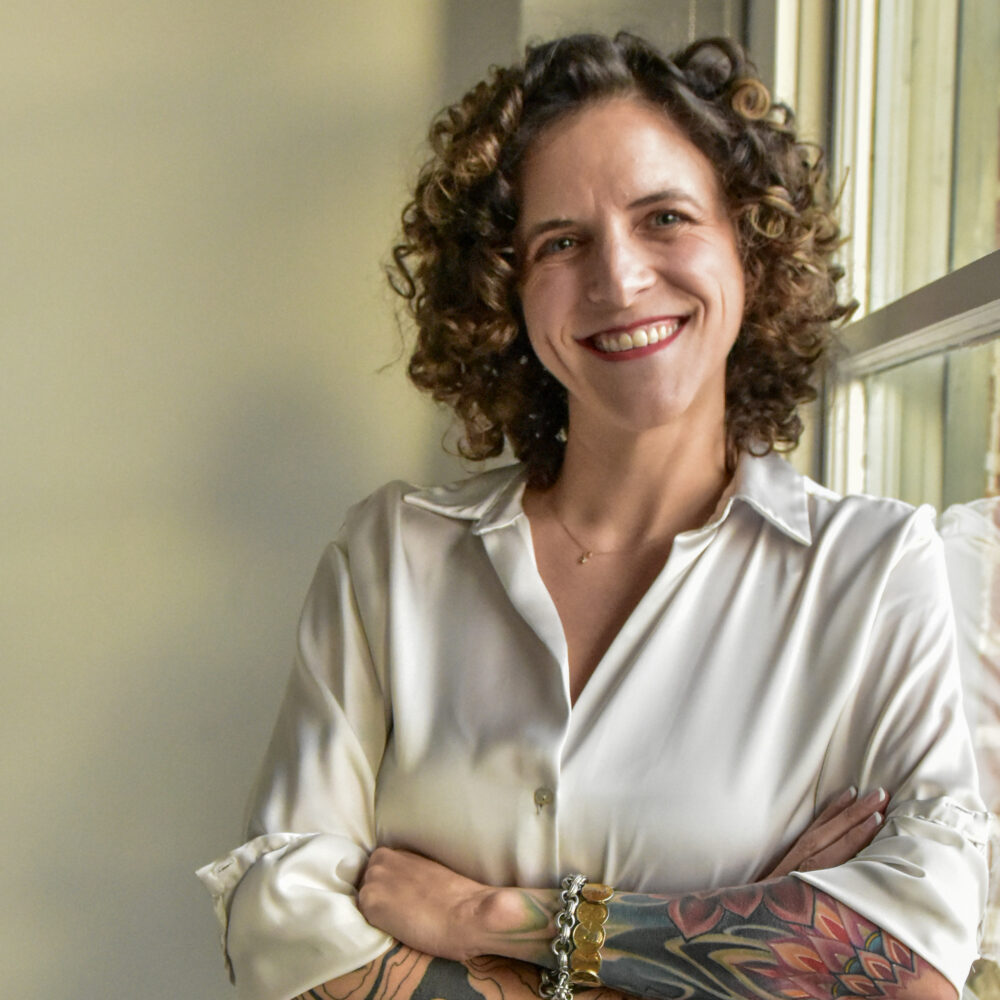 Rebecca Lazzelle is a former corporate process improvement director turned published author, mindfulness journal creator, retreat organizer and energy healing practitioner in Colorado. Her own path ran through burnout, therapy and EMDR, chronic back pain, and a severe gluten intolerance that went unnoticed for decades. Now she helps people move out of survival mode and reconnect with themselves.
- Website: rebeccalazzelle.com, with a free discovery call and session packages. She also has a YouTube channel with short videos on what the Emotion Code and Body Code are and what a session looks like.
- YouTube: @RebeccaLazzelle
- Memoir: What the F*** Was That? A Memoir of Betrayal and Reclaiming Myself (2026)
- Journal: You Can F***ing Do This!, a mindfulness journal
- Retreat: Pause • Presence • Possibility, August 5–10, 2027, in Estes Park, Colorado (retreat listing)
Before You Go
Eager to Be Healthy is a value-for-value podcast. No ads, no sponsors, nobody telling us what we can and cannot say. If this episode was worth something to you, send back what it was worth at eagertobehealthy.com/support.
Got a story like Rebecca’s, or a corner of health you think the Hive should hear about? Come on the show. Start at eagertobehealthy.com/booking.
Always consult your healthcare provider before making changes based on health content.
So here’s my challenge for this week. Pick the one thing you’ve lived with so long it feels normal. The headache. The stomach. The dizzy spell you laugh off. Ask somebody you trust if it happens to them. I’ve brushed off a few of my own over the years, so I’m saying this to me too. Rebecca’s sister said zero. Sometimes that’s the most useful number you’ll ever hear.
Full Episode Transcript
Rebecca Lazzelle: I’m Rebecca Lazzelle, and I’m eager to be healthy.
Michael Scott Eger: Our guest today is Rebecca Lazzelle. She was a process improvement director. Now she’s an author, a retreat host, and an energy healer. She works with people who look like they have it all together and are quietly coming apart. She’s been there herself. Her second marriage ended in addiction, codependency, and domestic violence. It left her in a deep depression. So she rebuilt. Her memoir is What the F*** Was That? Her mindfulness journal is You Can F***ing Do This! Rebecca, welcome to Eager to Be Healthy.
Rebecca Lazzelle: Thank you so much, Michael. I’m so happy to be here today.
Michael Scott Eger: Now, I’m not sure if you censored it in your copy, but my copy got it censored.
Rebecca Lazzelle: Yes. It was a conversation with my publisher. I wanted to put the actual word on there, and they were like, “Well, you know, it’ll be easier to sell in some locations.” And I was like, “All right, fine, I’ll put the asterisks.”
Michael Scott Eger: All right, so before we get going, we want to remind our listeners: this is a listener-supported program. That means we’re value for value. If you get something out of this, send us some love and support. Visit us at eagertobehealthy.com/support and show us some love. Now, Rebecca, have you always been healthy?
Rebecca Lazzelle: So when I listened to your podcast, I had a lot to think about this, because I really was like, have I always been healthy? And I think the answer, actually, for me, it’s not like a yes or no, because I have led a relatively healthy lifestyle, sort of from the outside. So I was a really active kid. I did a lot of sports when I was in school. I stayed active through college. I was active as an adult. I always tried to eat healthy. You know, kids always eat junk. Maybe they don’t always, but kids eat a lot of junk food. And when we’re younger, we have, you know, higher metabolisms, and we can eat junk food. And so I feel like I was doing things to lead a healthy lifestyle. But unfortunately, I was not always healthy.
It started when I was about 10 or 12 years old. I started kind of fainting a lot, which… a lot is sort of relative, but I know people who’ve never fainted in their whole lives. So it was a lot. And they were just like, “You’re growing too fast,” or “You have low blood pressure,” or “You have postural orthostatic tachycardia syndrome, POTS,” and all of these sort of things. And that fainting persisted up until about three years ago, and I was able to actually figure out what was going on. I had a severe gluten intolerance. And my biggest symptom… there were other symptoms as well, but my biggest symptom was actually fainting. By the time I was actually sort of tracking things, I was fainting like 10 times a month, which is like a lot.
And also there were a lot of injuries and sports injuries. I remember when I was in high school, I started my cycle, and then I lost so much weight, which is really unhealthy, and I stopped my cycle. And as a woman, that’s not a healthy practice, right? When we’re young and we’re growing, to not have our cycle. So unfortunately, I thought I was living a healthy lifestyle, and I have not been as healthy as I would have liked to have been throughout my life.
Michael Scott Eger: Okay. So gluten intolerance is a common thing. I’ve never heard of the fainting symptom, but it affects us all differently. Me, it affects my neurological system. But anyway, as you know, the next question is… you want to say it?
Rebecca Lazzelle: Yes. Have you always been happy?
Michael Scott Eger: Okay, it’s becoming a trope. Gotcha.
Rebecca Lazzelle: I also thought a lot about this question, because I think I did go through hard times, and everyone goes through hard times, and that’s how we grow and change. You know, challenge is what helps kind of push us to change. But my parents got divorced when I was a kid. You know, I was eight years old. So that is definitely a hard time as a child. We moved around a lot. In general, I’ve moved around a lot. That can be hard on children, for sure. But when I look back, you know, like hindsight, I’m like, I think I was relatively happy. I haven’t been a glass-half-empty person, except sort of on and off. Definitely in my second marriage, as you mentioned, there was addiction and codependency and mental health issues and all kinds of things. And I was not in a happy place for a very long time after that incident with my ex. And I feel like I’m still kind of, you know, learning and growing and healing. And so some days are better than others. But overall, as a person, I am a happy person in general.
Michael Scott Eger: So despite all that happened in your past marriage, you were able to recover?
Rebecca Lazzelle: You know, I think recovering. I’ve talked to people, and I also, like… recovered, recover, heal, healed. It’s a gerund. It’s an -ing, like I’m healing still. You know, I recently learned that my ex moved out of state, and that created a lot of relief, logically, in my head. And then I went to a concert, and I was still scanning for him. So there is a little bit of work with my nervous system and my subconscious that still needs to happen there. And all of that currently is supported by the medical providers that I’m seeing and the mindfulness practices that I have, and trying to eat healthier than I ever have in my entire life. So I think it is called a healing journey for a very, very good reason.
The other sort of comment I have on that, and why I don’t strive to use the word “healed,” is because I feel that the goalpost is always changing. So for example, the goalpost of what healed looks like looks different when my ex doesn’t live here, because I have more space, and I don’t have to worry as much, and my system can relax a little bit more, hopefully. And so it keeps kind of changing, and I keep changing and growing. And so it’s a constant thing that I’m doing now: healing.
Michael Scott Eger: Okay. So let’s figure out: what’s your biggest inflection point?
Rebecca Lazzelle: In my health journey, I think there’s been a couple. I think one of the things that I’ve learned in my journey is that it’s always worth talking to somebody else about what’s going on with you, even if it’s weird, because that’s how we can recognize that something we’re experiencing, other people might not experience. And I think the fainting was a great example. My sister called me, and she’s like, “How you doing?” And I’m like, “Having kind of a horrible day. Like, I fainted twice.” And she’s like, “Are you at the hospital?” And I’m like, “Who goes to the hospital when they faint?” And she’s like, “Everyone.” And she says, “How many times have you fainted?” And I was like, “Like, when? Like last week? Or what’s the timeline?” And I was like, “Wait, how many times have you fainted?” And she’s like, “Zero.” And I was like, “What? I’ve fainted like over a thousand times in my life.”
And so I think there’s been different points as an adult, though. I don’t know. I was just, you know, the product of divorced parents in the ’90s, overachieving child, really getting at it and working towards the standard American dream for a very long time. And my health is really what changed everything.
Going back to the fainting, my ex would catch me. Like, I fainted and he caught me at the airport one time, and my other sister was there, and she was like, “What is this? Like, you need to go to the doctor.” So there was that. I had a back injury, and all this was kind of around the same time. I was doing CrossFit, and all of a sudden, I wasn’t even doing a workout and like, “Oh my God, I hurt my back.” It was just, over a week period, I could no longer lift my arm over my shoulder. It was just like, I don’t know what happened, but something is going on.
And so all of those symptoms and all of that stuff sort of exacerbated as I was dating my second husband. It’s very interesting. The very beginning of that relationship with my second husband is when all of my health stuff started to go just haywire. So it might even be that relationship that was a little bit of a health turning point, for a variety of different reasons.
Michael Scott Eger: Well, you know, some stressors prompt change.
Rebecca Lazzelle: Absolutely. And our body knows, you know? Even if we don’t know up here in our conscious mind what’s happening, our body is reacting to all of the stimuli that we’re receiving, right? And so in that case, I’m kind of like, you know, in hindsight, I’m thinking, okay, my body was like, “No.”
Michael Scott Eger: Yeah. So, I mean, you’ve always been exercising?
Rebecca Lazzelle: Yeah. So I did sports as a young child. I was like one of those ridiculously adorable three- or four-year-old girls playing soccer, just running around the field going the opposite direction. You know, I played soccer for a really long time. And in high school, I got into pretty much everything. I was not very good at all of the sports, but I was a good cheerleader, and I did basketball and swimming and track and cross country. So I was always really active. Same thing in college. I ended up, you know, finding a friend and eventually a roommate who liked to go to the gym for like two hours a day and just do whatever cardio. And when I became an adult and I moved back to Colorado, I started doing CrossFit. So I have been a relatively active, into-exercise person. I like hiking and things like that. I like to be outside as well. And I would say, yeah, I’m pretty active. CrossFit is a bit of kind of an extreme activity sport.
Michael Scott Eger: It’s almost like a religion in some exercise.
Rebecca Lazzelle: It’s a little bit like a cult.
Michael Scott Eger: I was avoiding that term, but I was thinking it.
Rebecca Lazzelle: Yeah, I mean, like a good one. The place that I went, I really loved. I wore ankle braces for the first year that I did CrossFit. Like, I had a lot of weakness going on, and it really did help build my strength. And now I prefer to walk. I’m not really a runner. You know, I had the goal of running a marathon in my life goals, and I just recently took that off the list because it’s just not for me. I think walking, I prefer. I also do BodyPump now, which is lots of low weight, high reps to really fun music with a cool instructor. And I love that because it’s a full-body workout, and it’s efficient, you know, like in an hour. So yeah, I’m not the most active and not the most into sports, but yeah, relatively.
Michael Scott Eger: How has your diet changed over the years?
Rebecca Lazzelle: Yeah. So it was really interesting. When I was in high school and I started cross country, my coach basically said, “You can’t drink soda,” like, you know, carbonated, sugary beverages, “and do well in this sport.” And the next day I stopped drinking soda. And I’ve only had, you know, a couple of Jack and Cokes, and like a ginger ale when I have a stomachache, very, very rarely, but I do not drink soda. And so when I was competing, you know, in the high school competitions in those sports, I was really trying to eat as the coaches were indicating: carb loading before the events and lots of veggies.
I think a lot of people that have gone and had the experience of living in and going to college can sometimes, you know, resonate with a little bit of a lower budget. And so when I was in the dorms, I was eating much better, but I definitely had a little bit of a lower budget. I also was dairy-free since I was like 10 or 12 years old. In the ’90s, when you were dairy-free in the US, powdered soy milk was like the only option, and there were none of these dairy-free cheeses and all this other stuff. So I just really didn’t have milk at all. And so that did make up a large portion of the way that I’ve operated, kind of almost my whole life.
I would say during my first marriage, my first husband was from Costa Rica, and so they eat a lot of rice and beans. And I had about a decade where I ate a lot of rice and beans with a lot of different meals, three times a day. So that was definitely a very interesting time of my life. He was also a bit of a sweet tooth. But again, I think it was within the realm of sort of normality, of kind of average US diet.
I was listening to one of your other episodes where she was talking about her anti-inflammatory diet that she was on, and I’m now currently experimenting with that. I’ve done Whole30 a couple of times, which I really like. But I’m having some flare-ups right now and some things going on, and I found this cookbook, and I was like, “I want to try this low-inflammation cleanse.” But it’s more like a lifestyle is what it seems like, based on that podcast that I listened to and also sort of my current experience. So, like I said, I’m eating the healthiest that I probably ever have. So I feel happy about that. I don’t know if I feel better yet. I’m still trying to decide. But I’ve never really eaten out. Like, I don’t eat a lot of fast food. And so that’s been something… again, in high school, my coach was like, “You can’t really eat fast food. You can’t really do that.” And it was kind of like a one-and-done. So I think I haven’t had McDonald’s since the ’90s or something like that.
Michael Scott Eger: I remember the ’90s.
Rebecca Lazzelle: I think the recipes back then were really different, though, based on what I’ve seen.
Michael Scott Eger: Well, from what I remember… so I’m a few years older than you, so we had less internet when we were figuring out my health issues. And I remember community groups and handwritten recipes and books, and these books might have been, I mean, incomplete by today’s standards, but that’s what we had. And we had to figure it out.
Rebecca Lazzelle: Right, which is what was available.
Michael Scott Eger: Yeah, I remember going to Asian markets because we learned that I could get gluten-free noodles. And to this day, I still go to the Asian market for my noodles because they taste so much better than the gluten-free pasta they sell in the Italian section.
Rebecca Lazzelle: You are not wrong. I think I’ve had a hard time with chickpea pastas specifically. But now, on this anti-inflammation sort of diet, you can’t have rice either. So rice noodles… I’m having no noodles right now. It’s a little bit hard.
Michael Scott Eger: So I know my blood sugar spikes when I have noodles, but there is something nice about them.
Rebecca Lazzelle: There’s something nice about noodles, yes. You are absolutely right.
Michael Scott Eger: And my palate is very Pan-Asian, so I do experiment with those flavors, and noodles are just texturally interesting. And as someone that doesn’t have bread anymore… yeah. Anyway.
Rebecca Lazzelle: Right. Yeah, my roommate makes the best drunken noodles, and so I make an exception on everything for that recipe because it’s so tasty.
Michael Scott Eger: The one thing that I will say is with most of the Asian recipes, they put a little bit of sugar in to enhance it. And so I’m having an argument with my wife. She’s of Indian descent, and she’s like, “There’s sugar in the recipe.” I’m like, “But I don’t want the sugar.” So I increase maybe the onions or the tomatoes or other components, and she’s like, I’m not following the recipe. And then we just agree to disagree.
Rebecca Lazzelle: Yeah, exactly. And you’re right. I think there are a lot of recipes that call for sugar. I mean, all the Thai curries. I love Thai curry, and most of those have like honey or sugar or something in them as well. So I just make it without.
Michael Scott Eger: Yeah. I mean, once your palate adjusts, you just don’t need it. And the problem is our standard American diet is so sugar-forward. Now we expect sweetness in everything.
Rebecca Lazzelle: Well, it’s because it is in everything, right? I think one of the things about Whole30, which was so eye-opening, was like all the sauces and the dressings and all those, you know, prepackaged bottles that you buy at the store have like four grams, you know, a packet of sugar, like per serving. Like bread. Bread also has like three to four grams per slice. Sometimes per two slices, but normally per slice. And it’s like, it’s an entire sugar packet, four grams. Like, what is happening?
Michael Scott Eger: It’s so easy to make a four-ingredient salad dressing. And yeah…
Rebecca Lazzelle: Right, without sugar.
Michael Scott Eger: And the thing is, now I have control of the oil. I don’t make as many things purely from scratch, but salad dressing’s one of them because it’s easy. I can do Indian flavors, I can do Thai flavors, I can experiment with many flavors. And the thing is, getting a salad dressing with olive oil, real olive oil, is extremely difficult to do, especially in a cost-effective way. And yet you could go to Walmart and buy a bottle of actually decent olive oil. Okay, it’s not perfect, but it’s a lot better than what you can get in any salad dressing. And oftentimes it’s cheaper per ounce. And that’s the most expensive ingredient.
Rebecca Lazzelle: Yeah. I’m definitely a fan. And now, I did the Whole30 two different months in two different years. And the second time is when it really started to kick in, and you know, you look at the back of just boxes or things where you’re like, “I wonder if there’s sugar in this.” And the answer is usually yes. And you’re like, “Why is there sugar in frozen potatoes?” Like, that’s an extreme example. But you get to the point where you’re just like, “Holy cow, what if I’m eating all of this sugar throughout the day?” Like, I’d rather eat a cookie. You know, a gluten-free, dairy-free cookie. I’d rather have an actual sweet where I’m like, “Wow, this is a dessert, it tastes so good,” than have like 40 grams of sugar just stuffed in my food all throughout the day.
Michael Scott Eger: Yeah. So I’m not sure if you’ve seen it, but there’s a few memes out there that show a stack of donuts and then a sweetened coffee drink from, I think it was Dunkin’ or Starbucks, and they were comparing how many donuts of sugar are in it.
Rebecca Lazzelle: Oh my gosh. Wow, that is a very meaningful visual.
Michael Scott Eger: And when you realize how little sugar is in a glazed donut versus your coffee drink, it becomes eye-opening.
Rebecca Lazzelle: Yes. And sugar is like one of the worst inflammatories, right? Like, when we talk about the rest of your diet, having refined sugars, that is one of the main things on an anti-inflammatory diet. They’re like, “You gotta cut that out.”
Michael Scott Eger: It’s quick energy, and it fuels you indiscriminately, so it fuels the bad parts of you probably quicker than the good parts.
Rebecca Lazzelle: And for shorter periods of time, right?
Michael Scott Eger: And then your body has to dump insulin in to absorb that spike, and then you store all those toxins in your fat cells, because insulin is an energy storage hormone, which means it goes into your fat cells. Now I’m gonna quiz you. If you don’t know the answer, just say so, okay?
Rebecca Lazzelle: Okay.
Michael Scott Eger: What’s in the Whole30?
Rebecca Lazzelle: What’s in the Whole30? Well, what isn’t in the Whole30, right? So the Whole30 is no dairy, no gluten, no sugar, no potatoes, I don’t think. Or you could have sweet potatoes as part of that, but no white potatoes and potato chips and french fries and things like that. It’s also no snacky foods. So if you normally like to snack on something, I don’t know, like nuts or something that is allowed as part of the program, they kind of also limit the snacking. So they want you to focus on the actual eating of the meals. So I guess what’s included is usually meats and a lot of vegetables and fruits.
Michael Scott Eger: Okay. So it’s a form of elimination diet.
Rebecca Lazzelle: Yes. It’s actually one of those elimination, allergy-identification diets where you go, no alcohol, right? You go for 30 days and you take all this stuff out. And then the idea is that on day, you know, 30, 31, 35 or whatever, you add back one thing at a time. So you add back rice, and then you see how you feel. White rice, maybe, and then you add back brown rice and you see how you feel.
The interesting part about us as humans is that I would say a majority of the people that I interact with, myself included, don’t add back in the correct way. We just add everything back the next day. And so it becomes really difficult then to identify the foods that might have been causing you, I don’t know, inflammatory problems or indigestion. So for example, I did the Whole30 for two 30-day periods over two different years, and I still didn’t figure out that gluten was causing the fainting, because I wasn’t adding things back in a logical, sort of documented, strategic way where I could say, “Okay, I added white rice today and I felt fine. Maybe I’ll add brown rice tomorrow.” I just kind of added everything back, unfortunately.
And so that’s the way that they recommend that you do this anti-inflammation cleanse as well: you kind of go off of everything, and then you add things back after your 30, 60, 90 days in a very strategic, documented way, so that you can say, “Okay, I added this back, and this is how I felt,” and you can really feel how you actually feel with that food.
Michael Scott Eger: Okay. And with that, you get some usable data, but you also learn the hard way that that data only comes when you control the variables. And now that you controlled the variables on your second time, you start to get usable data. And that data, it’s helped you make lifestyle changes.
Rebecca Lazzelle: Yeah, that, and I started seeing a Matrix Repatterning doctor, and he is absolutely amazing. With Matrix Repatterning, there’s only like 50 providers in the US that practice this type of doctor-ness. I don’t want to say medicine, necessarily, but it’s very, very cool. You have to be an actual doctor to then go on and get the certification for Matrix Repatterning. And after about four or five months of me tracking the number of times that I was fainting, and just conversations, he was like, “I just want you to go off gluten for two weeks. Just try it.”
So I actually went to Hong Kong, and they had a ton of other fun non-gluten stuff that I could eat there, which was amazing, right? And I had fried fish on the two-week mark. And I was kind of like, “Okay, well, you know, my friend got this. I’m gonna eat some, and then I’m gonna see what happens.” And I fainted once the next three days. And so I was like, “Wow, this is pretty accurate.” Just by removing gluten, I went from fainting 10 times a month to three times a month. And then I was still kind of like, three times a month is still, you know, kind of a lot. Now that I know people go their whole lives without fainting, three times a month is still kind of a lot.
And I did a blood test, and I have a cross-reactivity to quinoa and oats. What that means in layman’s terms (because I’m a layman, and I feel like I barely understand this) is that the gluten molecule, the quinoa molecule, the oat molecules, they’re kind of similar. And so my body interprets quinoa and oats as gluten. They’re similar enough that it causes the same reaction for me. So, you know, there’s quinoa in a lot of gluten-free things, so I have to watch out for that. And sometimes I forget. But I also have an enzyme that I can take when I think I might have had something, and sometimes it works wonders, and sometimes it doesn’t work at all. So it’s a little bit of a crapshoot.
Michael Scott Eger: Is that enzyme effective?
Rebecca Lazzelle: Yeah, so it’s called GlutenFlam. And I can’t do cross-contamination. So french fries, for example. I love french fries. I love potatoes. It’s my favorite food, but I love french fries. But french fries fried in a fryer with things with gluten, I can’t do that. And I have tried and tried and tried with my enzyme, and the enzyme doesn’t work with the cross-contamination. But I had a piece of bread. It was like a gluten-free whole wheat, seven-grain bread or something like that. And I only had one piece, and it did have a little bit of quinoa in it. And so I took a couple of the enzymes, and it seemed to work. So if there’s a very small amount of gluten or something similar, the enzyme does seem to work for me.
Drizzilicious are amazing, if you haven’t had them before. They do have sugar, actually. But they’re these little popcorn cakes, and they have icing drizzled on top, and they’re very small. They’re like perfect bite size. They’re gluten-free, but they make them with quinoa. And so I can only have like one or two of those. It’s a small amount of quinoa, but I can only have one or two of those, and I have to have my enzyme in order for me to be able to be fine.
Michael Scott Eger: Now, are you working in… changing the topic, of course. Sorry, I forgot to segue. I’ll get better at this.
Rebecca Lazzelle: Absolutely. Yes, let’s do it. Perfect.
Michael Scott Eger: So now you provide care, or you provide some type of coaching services now?
Rebecca Lazzelle: So it’s energy healing. And people are like, “What is that?” If you’ve ever heard of Reiki, that’s a good place to start. Reiki is a little bit more mainstream when it comes to energy healing. If you’ve ever had a Reiki session… the modality that I practice is called the Emotion Code and the Body Code. And so with this modality, we make this assumption that when we do not fully process events (big T, little t traumas or whatever in our lives, or emotions in general), those kind of energies get stuck, actually, in our subconscious, in our energy body. And so the idea with the Emotion Code and the Body Code is that we can identify those energies and release them to allow your overall energy to move more unencumbered, to move more freely. We can release… I mean, it’s wild… we can release intergenerational, like things you’ve inherited from your parents, and things that you have gotten, you know, at age one, and things that you didn’t process from last week. So there’s a lot that kind of happens there.
And it’s a modality that I found in my healing journey, and I was doing it on myself. And it kind of came to a point where, in my process improvement work, I was like, this is cool. Like, I like what I’m doing, but I actually would love to and want to work in a field where I’m actually improving people’s actual lives, like helping them live brighter, more authentic versions of themselves in the life that they have. And I was like, this energy healing modality has really helped me a lot. And so I got certified and have been practicing with my clients for almost a year now, which is really exciting. So I’m still in kind of business-building mode, and I’ve got a lot of other things going on with the books that I wrote, and, you know, so there’s been kind of a lot going on. But I’ve been very fortunate to be able to help some clients already in the energy healing space, which is really exciting.
Michael Scott Eger: Okay. So you did the books first?
Rebecca Lazzelle: Around the same time. So I did the energy healing and had already started writing the books, or one of them. I started writing the memoir last summer, and it was more of a healing practice for me. So I dictated, actually, the first draft of the book, because I was doing a road trip and I was in the car a lot. And I’m a verbal processor. And so that was a very interesting, enlightening experience, kind of like a verbal journal, if you will. And the book was about twice as long when I did the first draft than it ended up actually being, because not all of those stories needed to be told, but I needed to get them kind of out of my space and to be able to let them go.
And so that was an interesting experience. And it took about a year from when I started writing the book to publish the memoir. And in that time period, I also got the energy healing certification. And that was really when I decided… I’d gotten let go from my job, and I was like, if I’m ever gonna switch to an entirely different field, this is the time to do it.
Michael Scott Eger: Okay. So you have a little bit of revenue to make the transition.
Rebecca Lazzelle: Yeah. And I’ve got a lot of irons in the fire. I sold a house a couple of years ago as well. And I have a day job, you know, right now too. So yeah, there’s been a lot of other things that have been keeping me busy too.
Michael Scott Eger: All right. So when people work with you, is it like a retreat? Is it like online? Is it in person? Is it a workshop?
Rebecca Lazzelle: Yeah. Right now it’s mostly virtual. I don’t have an office space, but I could totally… if someone was like, “I want you to come to my house,” that’d be like, “Okay, cool.” You can definitely do it in person, but it works really conveniently virtual. You had somebody else who was talking about virtual coaching, and it’s like people don’t have to worry about traffic or going out. You know, they can just do things without having to worry about that, and it’s more convenient.
It’s also interesting because the energy work that I do, I can do it while you’re sleeping or while you’re at the grocery store. And so it provides an even further level of convenience, because you can say, “Hey, my day got really busy. I don’t have time for a virtual, you know, one-on-one meeting for our appointment.” And I can say, “Well, I can still do it for you, you know, as long as within the next hour you promise you’ll drink some extra water.” Or you’re not gonna be, I don’t know, on a plane or kind of in an interesting situation. If you’re just running normal day-to-day life, it’s something I can do while we are not on the phone together. And so that is wild, and also convenient.
Michael Scott Eger: Okay. And if some people want to work with you, what would that look like? Or how would they reach you?
Rebecca Lazzelle: Yeah, so I have a website, rebeccalazzelle.com, and I’ve got a free discovery call on there. I’ve got a YouTube channel where I have some introductory videos about what the sessions look like and what are the Emotion Code and Body Code and what is energy, and a little bit more details along that line. I have quite a few different packages online.
I think my thought process around energy healing is that it goes really well with other healing modalities: traditional Western medicine, things like acupuncture, therapy. It’s not really a replacement for any of those things. They all serve their own place, but it goes really well alongside.
And while there are testimonials… so the guy who came up with this protocol, his name is Dr. Bradley Nelson, and he has testimonials all over online of, you know, someone who came up during one of his conferences, walking with a walker, and walked off stage without a walker, and all of these really sort of miraculous things. In my experience and with the clients that I’ve seen, it’s a little bit more kind of over time. It’s like physical therapy for your subconscious and your energy body, right? You don’t go to physical therapy after an accident or an injury one time and expect to be fully well, right? You end up going like, I don’t know, 20 times, you know, two times a week for 10 weeks or something like that. And so, in my experience, it’s a little bit more like that. There’s things that we can incrementally work on, you know, each week or every two weeks, that end up making a huge impact after four appointments or eight appointments or six months or kind of whatever time frame.
I also do have retreats, and you mentioned this earlier. I am offering a kind of wellness retreat overall with a couple of different practitioner partners in Estes Park in August of 2027. And that is curated based on the idea of experiencing a lot of different things that have the potential to be healing or to be nourishing for somebody, and allowing somebody the opportunity and space and downtime to have those experiences and then kind of pick and choose what will actually work for them when they come back.
Somebody recently said that, they were like, “It’s like a charcuterie board of retreats.” Because it’s not a yoga retreat, but we do yoga, and it’s not a meditation retreat, but we do meditation, and it’s, you know, we do sound baths and we do art and we do integrative art and we have conversations about the nervous system and we do IFS and we do all this other kind of cool stuff. And so you do a lot of things over a six-day period, and then you say, okay, well, hopefully at least one of those things is something that you’re like, “This is something I want to do when I go home.”
Michael Scott Eger: Okay. Sorry, my frog came back. So just make sure you send all that stuff in your email so we can put it in the show notes.
Rebecca Lazzelle: Yep, absolutely.
Michael Scott Eger: With great gratitude, I want to thank you for coming on to Eager to Be Healthy, and till the next time, be well.
Rebecca Lazzelle: Thank you so much, Michael, likewise.
Sources
- Rebecca Lazzelle, rebeccalazzelle.com
- Fisher & Farmer, What the F*** Was That? A Memoir of Betrayal and Reclaiming Myself by Rebecca Lazzelle (ISBN 9781970582277)
- Insight Timer, Pause • Presence • Possibility retreat, Estes Park, Colorado
- National Institute of Diabetes and Digestive and Kidney Diseases, Symptoms & Causes of Celiac Disease
- National Institute of Diabetes and Digestive and Kidney Diseases, Diagnosis of Celiac Disease
- Beyond Celiac, A small subset of those with celiac disease react to the protein in oat, study confirms
- Celiac Disease Foundation, Study Demonstrates Current Enzyme Supplements for Celiac Disease Ineffective (2015), summarizing Janssen G, et al., PLoS One, 2015
- National Center for PTSD, U.S. Department of Veterans Affairs, Common Reactions After Trauma
- National Domestic Violence Hotline, thehotline.org
- American Heart Association, How Much Sugar Is Too Much?
- Whole30, Original Whole30 Program Rules (2024 update)
- Whole30, Whole30 rule changes
- Discover Healing, The Emotion Code
- Matrix Repatterning, About
- IFS Institute, What is Internal Family Systems?
Leave a Reply