On day ten of the EPICDECA, JD Tremblay was swimming off a Hawaiian island when the sharks showed up. Ten Ironman-distance triathlons in ten days. More than 1,400 miles of swimming, biking and running. Six athletes started. Three finished. JD was one of them. And here’s the part that got me. Ask JD about happiness and he’ll steer you to emotional regulation.
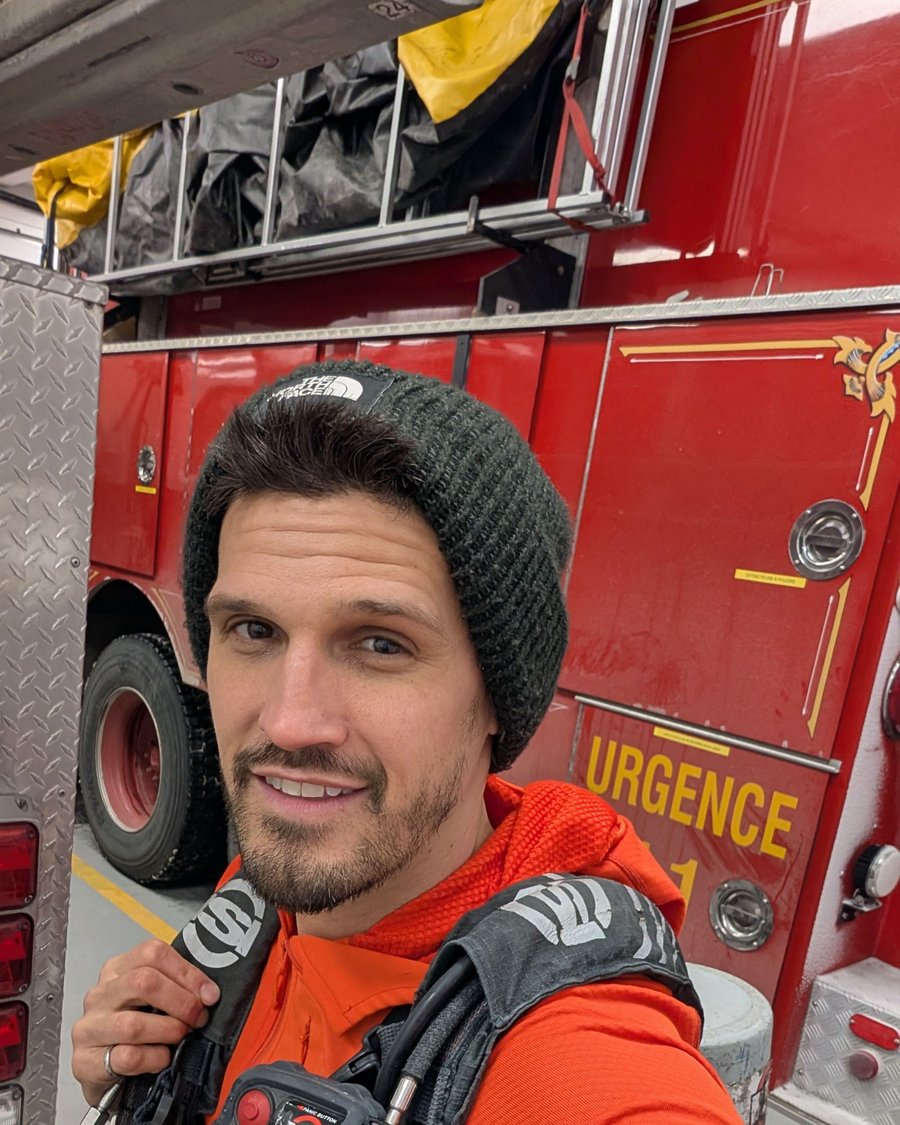
JD is a volunteer firefighter, a military veteran, an engineer and a certified naturopathic practitioner. He’s Director of High Performance at Hungry Warrior Academy and the author of Hunger for More in Life. For him, happiness is a side effect. It shows up when he’s serving people, chasing hard goals and growing in his faith.
I’ll be honest about why this one stuck with me. I have ADHD. I’m great at starting things. Finishing them is the real work. JD finished something most of us would never start, so I wanted to know how he does it.
Subscribe: Apple Podcasts · Spotify · Amazon Music · RSS (any podcast app)
Ten Ironmans in Ten Days: Why Pick Something This Hard?
Let’s do the math first. One Ironman is a 2.4-mile swim, a 112-mile bike ride and a 26.2-mile run. That’s 140.6 miles. The EPICDECA stacks ten of those back to back, one a day, island to island across Hawaii. That’s 1,406 miles in ten days (EPIC5 Challenge).
So why do it? JD wanted to push his own limits. And he wanted to show other men that most of their limits live in their heads. A lot of guys are stuck at the bottom of their own mountain. They failed enough times that they quit getting back on the horse.
He has a line about that I keep thinking about. “Those excuses that we live in today will become essentially the prison for tomorrow.”
JD is quick to say there’s nothing special about him. He’s human. Gravity still works on him. “It’s not even about me,” he told me. “It’s about Jesus.” He just tries to be as courageous as he can, so somebody else might try too.
On the show I suggested a small swap. When you hear yourself say “I can’t,” add one word. “I can’t yet.” Educators call it the power of yet, an idea that grew out of Carol Dweck’s growth-mindset research. JD called it one of the tools. I’ll take that.
Plan Like an Engineer, Leave the Rest to God
JD trained as an engineer, and he raced like one. He wrote a strategy plan that ran over 30 pages. Most of it was about what could go wrong and what he could improve.
Then he built prototypes. He bought an old bike, stripped the parts he didn’t need, swapped in better ones and took it to Texas to test it. He did the same kind of testing with his run shoes and his wetsuits. Then he put the plan to work.
On the show I called that planning the snot out of it. JD’s version is better. Control every variable you can. Leave the rest to God.
Sharks were one of those variables. He knew he’d be swimming in open ocean. So he got to Hawaii two weeks early and paid some pros to take him into open water with sharks. “I think they were professionals anyway,” he laughed. “They took my money.” The point was to learn how his body would react before it counted. That’s how he could stay calm when it mattered.
It mattered on day ten. Sharks came in. His guides had told him sharks are often just curious, and dolphins sometimes move them along. That’s exactly what happened. The dolphins showed up, the sharks left and JD kept swimming. He never stopped.
A fair note for the curious: marine biologists say dolphins aren’t really lifeguards. When they run off a shark, they’re most likely protecting themselves or their young (Live Science). JD will still take the help.
He did stop once. On Ironman nine, a storm hit, and Sarah, his paddler, flew off her board into the water. JD swam over, they got her back on, and he asked if she wanted to keep going. She yelled at him: yes, keep going. So they did.
Happiness Is a Feeling. Emotional Regulation Is a Skill.
JD doesn’t call himself a happy person all the time. He says it plainly, and it sits at the core of how he thinks.
He draws a line between feelings and emotions. Feelings are your experience of life, and happiness is one of them. Emotional regulation is something else. It’s the skill of steadying your system so you can act.
His example comes from firefighting. When a firefighter puts a hand on a hot door, you don’t care if he’s happy. You want him steady enough to go through it and pull somebody out.
Here’s the part I liked best. That fight doesn’t start at the door. It starts a year or two before. It’s the breathing practice, the fueling, the training you put in when nothing’s on fire. Same with life. If your partner walks out and the divorce papers hit the table, the regulation work you did before that day is what carries you.
JD also says emotions can be measured, and the research backs him. When something startles you, your pupils widen, and researchers use pupil size as a measure of emotional arousal (Bradley et al., 2008). Breathing rate and heart rate shift too. So does heart rate variability, or HRV, the small changes in time between heartbeats. People with higher HRV tend to have better emotional well-being, and researchers think a healthy heart rhythm may help the brain’s regulation networks do their job (Mather and Thayer, 2018).
A lot of watches track HRV now. If you’re curious, watch the trend over weeks, not one morning’s number. And if something looks off, loop in your provider.
Eat for a Purpose
Ask JD about his diet and he skips the label and gives you a principle. Eat for a purpose.
A powerlifter might eat a whole chicken. That’s fueling for his sport. “I have yet to see an elite triathlete on their bike with a giant chicken leg,” JD said. Fair point.
His bigger worry is the rest of us. We’ve gotten comfortable with technology and a lot more sedentary. We burn less and still eat like we’re burning more. We have more health knowledge than ever, and a lot of people still aren’t applying it. Or they’re listening to the wrong crowd.
So who does JD listen to? People who practice what they preach. His nutritionist watches her own diet and makes great choices. That’s why he takes her advice on food.
Does he follow a named diet? Nope. He eats a bit of everything. During the EPICDECA, though, he went fully plant-based. One meal a day. The rest was fruit bars, shakes, and gels and electrolytes from Precision Fuel & Hydration. On a ten-hour bike ride, he said, you don’t have time to digest. Plant food felt like it moved through faster.
One honest note, since this is where your gut gets a vote. Most sports nutrition advice says go easy on fiber around race day. Sports scientist Asker Jeukendrup suggests eating lower-fiber foods the day or two before a race, because fiber can mean extra pit stops, gas and cramps (mysportscience). Look at what JD actually ate while racing, though. Gels, electrolytes and shakes. Gels are fast carbs with next to no fiber, so most of his race-day fuel lined up with that advice anyway. The plants came in at his one daily meal.
A 2023 review of ultra-endurance athletes found the most promising gut strategies were adjusting certain carbs and practicing race fueling in training (Ryan et al., 2023). Plant-based worked for JD. Your gut may vote differently. Test it in training, never for the first time on race day.
Finish What You Start: The EPIC Foundation and DECA System
Ten people registered for that EPICDECA. Six showed up at the start line. Three finished. JD didn’t care where he placed. He just wanted to finish.
That’s the part that hit me. I told JD that people like me, with ADHD tendencies, pick up projects and drop a lot of them. This podcast is my answer to that. I committed to doing it over and over again and made it the center of everything else. If something serves that purpose, I keep going. JD said that’s exactly the system they use.
At Hungry Warrior Academy, a Christian nonprofit, JD starts people with what he calls the EPIC Foundation. It’s four pillars, and each letter is one of them.
- E is eternal restoration. Do you have a relationship with God, and what does it look like?
- P is physical temple. How are you fueling, moving and caring for your body and mind?
- I is identity. Who are you, and how do other people see you?
- C is community. Who’s around you? Do you have people at all?
Wherever someone is lacking, the DECA system comes next. It borrows its name from the race. D is discipline. E is energy regulation. C is capacity. A is action.
For JD, the race is a tool. Hard challenges teach your brain you’re capable of more than you think. The real purpose is to be healthier and emotionally regulated.
Key Takeaways
- Read one, apply one. JD would rather apply one book than skim ten.
- Watch your excuses. Today’s excuse becomes tomorrow’s prison.
- Add “yet.” “I can’t” turns into “I can’t yet.”
- Rehearse the scary part. JD swam with sharks before the race so he’d stay calm during it.
- Build regulation before the fire. Breathing, fuel and training come before the door.
- Eat for a purpose. And test any race-day fueling in training first.
- Learn from people who practice what they preach.
- Finish what you start.
Frequently Asked Questions
Who is JD Tremblay?
JD Tremblay is an engineer, certified naturopathic practitioner, volunteer firefighter and military veteran. He is Director of High Performance at Hungry Warrior Academy, the author of Hunger for More in Life, and one of three athletes to finish the EPICDECA.
What is the EPICDECA?
The EPICDECA is ten Ironman-distance triathlons in ten days, island to island across Hawaii. Each one is a 2.4-mile swim, a 112-mile bike ride and a 26.2-mile run, so the full event covers 1,406 miles. JD says six athletes started and three finished.
What is the difference between happiness and emotional regulation?
For JD, happiness is a feeling that comes and goes. Emotional regulation is a skill: steadying your system so you can act. He builds it ahead of time with breathing, fueling and training, the way a firefighter has to be steady before he puts a hand on a hot door.
What did JD Tremblay eat during the EPICDECA?
He ate plant-based, one meal a day, and fueled the rest of the time with fruit bars, shakes, and gels and electrolytes from Precision Fuel & Hydration. Gels have next to no fiber, so most of his race-day fuel matched the usual low-fiber advice. Test any race fueling in training first.
What are the EPIC Foundation and the DECA system?
They are the two frameworks JD uses at Hungry Warrior Academy. EPIC stands for eternal restoration, physical temple, identity and community. DECA stands for discipline, energy regulation, capacity and action.
Before You Go
Here’s my challenge. Pick one thing you started and dropped. Not ten things. One. Finish it this month. Then tell me in the comments what it was.
Find JD Tremblay
Want more JD? Visit HungryWarriorAcademy.com or Hunger4More.com. His book is Hunger for More in Life.
Listened to this one? JD would love to hear what landed for you. Rate the conversation on SpeakerHub. It takes a minute.
Eager to Be Healthy is value for value. No ads, no sponsors. If this episode was worth something to you, support the show. Got a story the Hive should hear? Come be a guest. And subscribe wherever you get your podcasts.
I’m still working on that challenge myself. This show is the one thing I refuse to drop.
Always consult your healthcare provider before making changes based on health content.
Episode Chapters
- 00:00 Welcome
- 00:26 Meet JD Tremblay
- 01:46 Healthy, happy and applying what you learn
- 02:57 Firefighter, naturopath, engineer
- 05:29 Why the EPICDECA
- 08:17 Planning a race like an engineer
- 09:45 Sharks, dolphins and a storm at sea
- 13:38 Everybody climbs their own mountain
- 15:15 Happiness vs. emotional regulation
- 17:54 Eat for a purpose
- 22:23 What racing feels like
- 25:04 Finishing what you start
- 26:19 The EPIC Foundation and DECA system
- 28:53 Working with JD and closing
Full Episode Transcript
JD: My name is JD Tremblay and I am eager to be healthy.
Michael: Our guest today is JD Tremblay. Most people choose happiness. JD doesn’t. For him, happiness shows up as a side effect of purpose. Serving others, taking on hard goals, and growing in his faith. He’s one of the three people in the world to finish the EPICDECA. That’s ten Ironman-distance triathlons in ten days on six Hawaiian islands. Do the math and you get more than fourteen hundred miles of swimming, biking and running in ten days. JD is also an engineer, a certified naturopath practitioner, a firefighter, and a military veteran. He wrote the book, Hunger for More in Life. He is the director of High Performance Hungry Warrior Academy, where he helps people build strength in body and in mind. What keeps him going is pretty plain stuff. Steady training, good food, and a handle on stress. And discipline to do it all again tomorrow. JD Tremblay, welcome to Eager to Be Healthy.
JD: Yeah, thanks for having me, Michael.
Michael: It’s wonderful to have you on. So JD, have you always been healthy?
JD: For the most part, I would say that I’ve been healthy for the majority of my life, although it’s been increasing and getting better as I age.
Michael: Okay. What’s changed?
JD: I would say that the knowledge is definitely increasing over the years. So as I’m learning more, I am applying it. So I’ve seen a lot of people read tons and tons of books and not apply the knowledge as opposed to for me, I would rather want to read one book and then apply it and then read another and then apply it also.
Michael: And have you always been happy?
JD: No, I don’t consider myself a happy person all the time.
Michael: That’s normal for most people. It’s just most people don’t understand there’s a spectrum of emotions and happiness would be a nice goal, but it doesn’t always happen?
JD: Yeah, you’re totally right. Yeah.
Michael: So, can we talk about the resume before we get into the health and wellness stuff? Did I read that you’re a firefighter?
JD: That’s correct, yes.
Michael: What made you choose that line of work?
JD: I’ve always wanted to give back and be of service to others. I have this special ability, I would say, to be able to put myself in stressful situations and would say react differently than most people. I enjoy giving back to others even if it would cost me everything.
Michael: Well, we need people to do the crazy stuff to keep others alive. So we thank you for that. Where does the naturopath fit into it?
JD: Yeah, everything is about health. So a naturopathic practitioner is a healthcare provider that helps with the innate ability of the body to heal. And so I went to an institute to learn about health for a few years and I learned how to use natural remedies or pathways.
Michael: And you did that before after the firefighting happen?
JD: That was before the firefighting and then right after the engineering.
Michael: Okay, and I’m assuming your firefighting duties are in a volunteer role?
JD: That’s correct. Yes. So we have the clinic, we have the Hungry Warrior Academy where we help men develop more clarity and discipline and then on a volunteer basis. So when I have, would say spare time, then I go and fight fires and we go in mountains and do some search and rescues.
Michael: Okay. We want to make sure people know that you’re human, not superhuman.
JD: Yeah, that’s correct. There’s nothing special about JD at all. I just choose a different path than most people.
Michael: Excellent. Now, you like triathlons from what I guess.
JD: Yeah, that’s correct. Yes.
Michael: And you pulled off the EPICDECA?
JD: Yes, that’s correct, yes.
Michael: All right. So why?
JD: Well, wanted to push the human limits, my own limitations and to inspire others as well, because there are people that are stuck at the bottom of their own mountain, I would say, trying to get into the sports or trying to win a battle that oftentimes because they failed too many times, they don’t want to get back on the horse, so to speak. So, yeah, I wanted to create this form of inspiration to other men that might have lost hope that their limitations are oftentimes only in their heads.
Michael: So what I heard was that you did it to lead by example of falling down and getting up.
JD: That’s great.
Michael: Okay. Because life is not always easy and sometimes we need to choose the hard things to build character.
JD: Exactly. Because those excuses that we live in today will become essentially the prison for tomorrow. And so many people are living in these types of excused prisons that they’re creating in their mind. And as a result, this compound, the effect of their own limitations for me. I tried to push those limits to the best of my abilities. As you mentioned, I’m still human and so I do have limitations. I’m not against the law of gravity or there’s nothing godly about JD other than me being a Christian man. It’s not even about me, it’s about Jesus. So really there’s nothing that special about me other than I try to be as courageous as possible to inspire others.
Michael: So you hinted on the narrative of can’t and part of the reason why you push your limits is to expose that you can.
JD: Yeah, there’s many people that are telling themselves they can’t. And meanwhile, they are in a position where they can definitely accomplish the task, but they’ve set these barriers for themselves.
Michael: And that might be a question of changing the can’t to yet.
JD: Yeah, that could be one of the tools that they’re using as a mindset.
Michael: All right. So how do you prep for these events?
JD: Well, for me, I use the scientific method that I learned in engineering. So I would design a plan. For the EPICDECA, it was: I just want to finish. For other races, maybe I want to win or I want to finish in a certain position. And then after this, I would create some form of strategy. And so that strategy for me was over 30 pages of understanding what could go wrong and what I could optimize and then I create a prototype. So just for the bike itself, I purchased an old bike and then rebuilt all of the parts that I did not need and I exchanged them and purchased and then screwed them in. And then I tested the prototype. So I went to Texas to test the prototype, so just for the bike, that was one. And then I had one for the swim and then for the run it was the shoes for the swim. Was a different types of wetsuits or different types of gear. And then after this, I had to implement the plan.
Michael: So what you’re saying is you factored in contingencies and you plan the snot out of it.
JD: Exactly. I made a really good strategy plan and then I tried to calculate as many variables that I could control and then all the rest would be left to God. So one of these variables I understood was that I would have to swim with sharks to complete the EPICDECA because I would be swimming in the ocean. So when I got to Hawaii, I got there two weeks prior to acclimatize to the climate. I went to the top of the island, paid some professionals. I think they were professionals anyway, they took my money and then they got me in open water with some sharks and they taught me as much as possible. And then I realized how I would react if I ever encountered a shark. So that helped me regulate my system. And control that part of the variable. And then the other part was left to God as to see, well, am I going to encounter sharks or will I have to deal with this variable? And so on day number 10, we did encounter some sharks, but I also understood that those professionals were telling me that oftentimes the sharks come in, they’re curious. And if they don’t see any signs of threat, then oftentimes the dolphins will come and just push them away. So I did not know that prior to. So that’s exactly what happened. We also saw some dolphins. They push essentially the sharks away. The sharks just went away and I just continued with the race. Never, I never stopped. I just kept going and swimming, but that was to show what I had to go through.
Michael: Yeah, The worst thing you could do is if you saw a shark, you’d start panicking and then behave like an injured fish.
JD: Exactly. Yeah. And then they would attack me. Definitely. So either you look weak.
Michael: Yeah, they would say they’ll say, Hey, food.
JD: I did not want to be shark food on the tenth Ironman.
Michael: No. No one does. Yeah, but.
JD: Yeah, I was so committed that I probably would have kept on going.
Michael: Yeah. Did you have a safety boat nearby?
JD: Yeah, we were swimming with kayakers or a paddler beside us. So for me it was Sarah and she was on a paddleboard right beside me. Yeah, it was on Ironman 9, I believe it was. We encountered a big storm and… and she flew in the air and she ended up in the water. It was really choppy on that day. And I stopped. That’s the only time that I really stopped my swim. I went over. We got her back on the paddle and I asked her if she wanted to keep going because it was really choppy. And she yelled at me. Yes, we keep going. Of course. She was really into it. Yeah, we kept going. So that’s the only time that I stopped doing this.
Michael: All right. So this is something I would not do. But the point is you put yourself in a situation where you had to deal with stressors and physical fatigue and everything else and you came out okay.
JD: Yeah, exactly. As I mentioned earlier, everybody is trying to defeat their own giant. Or I use the analogy of the mountain. Everybody is trying to climb their own mountain and they would have to regulate their system based on a custom based system for them. They would have to climb their own mountain, whether they are trying to run as fast as they can up the hill or they’re trying to complete their first five kilometer. They’re trying to do their first triathlon. Maybe they’re having difficulties in their marriage. And so that is in itself some form of mountain that they’re trying to achieve where they’re trying to have a healthy relationship with others. So everybody is at their own pace. And I just wanted to be an inspiration to others in that sense.
Michael: And you hinted to the fact that some people use these big events as an inflection point in their life.
JD: Yeah, because what happened is that you’re pushing your limits. And so now that your brain understands that you’re able to push those limitations, then the brain is able to unlock somewhat of a different level and other aspects of life.
Michael: And some of that is just a possibility of what could happen if they allowed it.
JD: Exactly.
Michael: Okay. So, let’s go back to not always being happy. And I know you have a different philosophy than most of my guests. Could you explain it?
JD: Well, it’s because happiness shouldn’t be necessarily the deciding factor because there’s a difference between feelings and emotions and feelings are an experience of life which happiness fits in it. Now, emotion or an emotional regulation is different. So, for example, as a firefighter, if I touch the door, that I’m happy or not, you want a firefighter that is able emotionally to regulate his system so he can bust down through the door and save another person’s life, regardless of happiness. And that’s how I could explain the difference.
Michael: So sometimes you just have to choose and move forward despite your feelings.
JD: Well, that’s because very often the fight is not starting when you touch the door. To regulate your system doesn’t start when your partner touches the door and leaves and the divorce papers are on the table. It was a year ago or two years ago that you had to do all of the fighting or all of the regulation. So as a firefighter, it’s not when I’m touching the door. That I’m thinking, maybe I should do start breathing appropriately, or maybe I should have fueled properly, which is part of the energy regulation. The standard should be that we’re able to regulate our emotions and emotions are different because they can be quantified. So if I scare you, your pupils will get dilated. And so now I can calculate your response. It can be quantified. But if you want to calculate breathing within a minute because I scared you or if I want to calculate your heart rate or your heart rate variability. Then those are variables that I see if they’re improving. So as a result of improving your health, then you’re able to emotionally regulate your system much better.
Michael: Now, your diet’s different than mine. You want to explain it?
JD: Yeah. My diet is different. Well, I would say that we fuel for a purpose. That’s my best advice for people because there are multiple athletes that are heavy lifter, like power lifters. They would eat an entire chicken and that would be their specific diet and that’s specific for their sport. Now they’re eating for a purpose. I’ve never seen or have yet to see an elite triathlete on their bike or maybe on the run with a giant chicken leg or eating an entire chicken doing so. So I would say eat for a purpose. What happened is that a lot of people are not eating for a purpose and their intake is much greater than their output.
Michael: Flesh out a little bit.
JD: Well, over the years. We have become really comfortable with technology. The world is now becoming a lot more sedentary but yet our output of energy is much less and we’re still eating food and the food, the nutritional aspect is also decreasing. So now we’re more sedentary and our nutrition is decreasing and then we’re getting worse and worse in that sense. So as much as we have a lot of knowledge, I would say a lot of people are not applying it. Or listening to the wrong type of crowd to get them the results.
Michael: And what crowd do you listen to?
JD: Well, for me, I always first off, would say listen to someone who’s able to practice what they preach. That would be my first advice, because if you have a coach that is not practicing what they’re preaching. Then why would you listen to that individual? So my nutritionist is really healthy in that sense. She watches her diet and she’s doing some great life choices nutritionally. And so I would listen to her on the nutritional aspect.
Michael: Okay, so if you had to put yourself in a bucket, would you say you’re plant based, paleo, carnivore, standard American diet, where would you fall?
JD: Yeah, I eat of anything. I don’t follow a specific diet. During the EPICDECA, I did follow a vegan diet, and that’s because the vegan diet has a lot more fiber into it and does not last that long in your system. So that’s why I follow the vegan diet, because when you’re on the bike for 10 hours, you don’t have time to digest. And I wanted to be as efficient as possible. So I was vegan for a few years and that was for my training and to make sure I did not have to think about digesting all of my food. It was more just going through my system. So even during the EPICDECA, I ate one meal a day and the rest was all fruit bars and some shakes and I used Precision Fuel & Hydration for my gels and for my electrolytes other than that. It was all plant-based.
Michael: Okay, so yeah, you used the gels when you were on the go.
JD: Definitely, yes.
Michael: All right. And now so you could you take if we went through the motions of like you hinted on it with the sharks, okay? So what does it feel like to compete or even participate in these events? What did your body were your emotional processes?
JD: Well, at first you’re excited because you’re going to compete in another event. Then you go through this roller coaster of being scared. So once the body or the mind is scared, then for the survival, for survival purpose, your mind is trying to find a way to be regulated. So you’re trying to find a solution to that problem. And then you show up at the event and that’s when the real kicker is you’re scared and there’s a form of anxiety or stress, but it’s a healthy stress if you’re able to cope with it in a healthy fashion. And then as soon as the race starts, then you forget about all of your pain, all of your ache and the body just becomes on autopilot until the end of the race. You had better to create a plan or a fine strategy for your team to follow.
Michael: Okay. So if you’re at the beginning of the pack, if you’re at the end of the pack, if you’re in the middle of the pack, do your emotions change?
JD: It depends what your goal is. If you’re trying to be in first place, for me, my goal was I just wanted to finish. So there were 10 people registered, six people showed up on the start line and only three finished. So for me, it was about finishing that EPICDECA. But for other races, definitely the mindset would change based on your desired outcome. That I would finish first, second or third was irrelevant to me. As long as I finish it, I’ll be happy.
Michael: Yes, because finishing what you started is a concept some people forget. It’s people like me who have ADHD tendencies, we pick up all these projects and then we drop many of them. And that’s not good. And with this podcast I have committed to doing this over and over again and making it the focus that everything else becomes more consistent because now I have a central focus and if it serves this purpose I keep going.
JD: Yeah, that’s exactly the system that we use for sure.
Michael: All right. So you had a system. Do you still use it?
JD: For the EPICDECA.
Michael: No, for let’s say for your clients.
JD: To my clients. Yes, of course, we have the EPIC Foundation and then we also have the DECA system.
Michael: Okay. So can you explain that?
JD: For sure. When we do the intake, we’re trying to see what pillars are either lacking or too pronounced in someone’s life. So the EPIC Foundation are based on four pillars. It’s an acronym. E is eternal restoration. Essentially trying to see, you have a relationship with God? We are still a non-profit Christian organization. So we’re trying to see if you have a relationship with God or what does it look like? The P is physical temple. So how are you fueling? What are you doing physically and also mentally because the temple is the physical aspect and also the mental component. I is identity. We’re trying to see what is your identity in life. And how does people see you essentially and then C is community. What type of community do you have or do even have people around that surrounds you? So these are our foundational blocks to see where that person is lacking so we can direct them with our DECA system.
Michael: Okay. And then from there you.
JD: Then we go into the DECA system once the people are satisfied with the explanation of the EPIC Foundation. And then the DECA system again stems from the EPICDECA. It’s an acronym. The D is for discipline. E is for energy regulation. C is for capacity. And A is for action.
Michael: Now you said you used that term from the competition or the competition just happens to have the same letters.
JD: Well, the competition are part of it in terms of creating a certain level of healthy challenges for your brain to understand that you’re capable of so much more than you think. But they are not the sole purpose of it. The purpose is to be a healthier individual and to be emotionally regulated.
Michael: Right. So if people want to work with you, what would that look like?
JD: So we have HungryWarriorAcademy.com and then we have multiple individuals that could work with each pillar or each system that we have. And then we’re able to work with them through a series of blocks that we call them depending on their needs.
Michael: Okay. And if they wanted to reach out to you, how would they do that?
JD: HungryWarriorAcademy.com.
Michael: Okay. And is there anything else you would like to add?
JD: No, I really appreciate you having me.
Michael: And with great gratitude, I want to thank you for coming on the show. And till the next time we speak, be well.
Sources
- EPIC5 Challenge LLC. EPIC5 Challenge LLC Launches EPICDECA Ultra-Triathlon Event. PRWeb, 2022.
- Brock A. The Power of “Yet”. ASCD.
- Live Science. ‘I knew it was circling me’: Man attacked by shark was waiting to die, then dolphins saved his life. 2023.
- Bradley MM, Miccoli L, Escrig MA, Lang PJ. The pupil as a measure of emotional arousal and autonomic activation. Psychophysiology, 2008.
- Mather M, Thayer JF. How heart rate variability affects emotion regulation brain networks. Current Opinion in Behavioral Sciences, 2018.
- Jeukendrup A. Prevention of gastrointestinal problems. mysportscience.
- Ryan T, Daly E, Ryan L. Exploring the Nutrition Strategies Employed by Ultra-Endurance Athletes to Alleviate Exercise-Induced Gastrointestinal Symptoms: A Systematic Review. Nutrients, 2023.
- JD Tremblay: HungryWarriorAcademy.com and Hunger4More.com. Book: Hunger for More in Life.
Leave a Reply